
Best fire sprinkler systems for office buildings in 2026
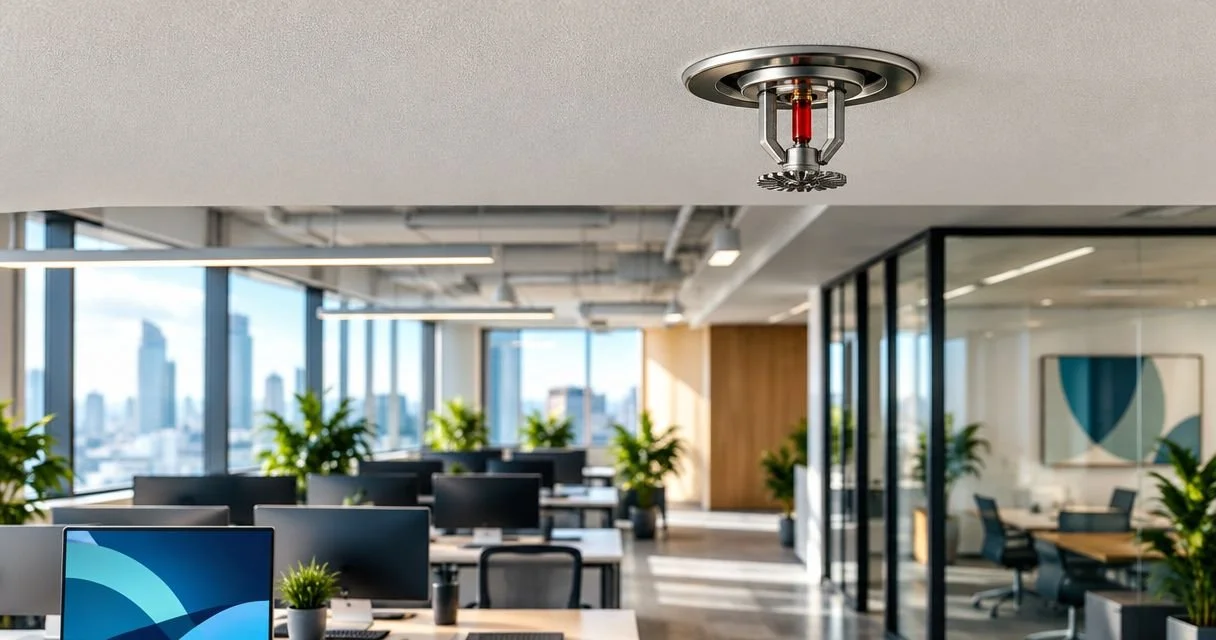
Best overall: wet-pipe fire sprinkler systems for conditioned office buildings. Best for areas exposed to freezing: dry-pipe fire sprinkler systems. Best for equipment rooms with a documented need for controlled water admission: preaction fire sprinkler systems. This 2026 guide compares the three approaches; Speedy Fire Protection provides commercial fire sprinkler design, installation, inspection, testing, and repair in Miami-Dade and South Florida.
TL;DR
Among the best fire sprinkler systems for office buildings, wet pipe is the default for conditioned offices.
Dry-pipe fire sprinkler systems address freezing exposure, not a general preference to keep pipes empty.
Preaction fire sprinkler systems suit equipment rooms when the design justifies detection-controlled water admission.
Speedy Fire Protection provides commercial fire sprinkler services; select the system through an approved, site-specific design.
Why this matters
An office address does not establish the fire hazard in every room. Open workspaces, records storage, parking areas, and equipment rooms require separate evaluation, even when they share one building.
A wet-pipe fire sprinkler system keeps water in the piping. A dry-pipe fire sprinkler system holds pressurized air or nitrogen in the piping, with water held behind a dry-pipe valve. A preaction fire sprinkler system adds a detection-controlled valve arrangement; its exact operation depends on the selected interlock configuration.
For a 2026 project, the governing references include the locally adopted edition of NFPA 13, Standard for the Installation of Sprinkler Systems, and applicable building and fire codes. NFPA 25, Standard for the Inspection, Testing, and Maintenance of Water-Based Fire Protection Systems, addresses ongoing inspection, testing, and maintenance. These references serve different purposes: a maintenance report does not replace a design review.
What makes the best fire sprinkler systems for office buildings?
Use these criteria before comparing proposals. The best choice is the simplest approved arrangement that protects the actual space, not the arrangement with the most controls.
Freezing exposure: Determine whether every water-filled section remains protected from freezing, including concealed and perimeter piping.
Occupancy and contents: Evaluate the actual use of each space, including storage, equipment, and tenant activities.
Water supply: Base the design on verified supply information and hydraulic calculations, not an assumption that the existing connection is adequate.
System complexity: Compare valves, detection dependencies, supervisory devices, and testing requirements.
Tenant alterations: Account for walls, ceilings, lighting, ductwork, and obstructions that affect fire sprinkler coverage.
Maintenance access: Make valves, drains, test connections, and equipment accessible to the people responsible for them.
For your 2026 specifications, document these criteria before asking contractors to price a scope. Otherwise, proposals can describe different levels of work while appearing to offer the same fire sprinkler system.
Fire sprinkler systems at a glance
Wet-pipe fire sprinkler system
Best for: Conditioned office floors
Standout feature: Water is already in the piping when a fire sprinkler operates
Key limitation: Water-filled piping requires protection from freezing
Dry-pipe fire sprinkler system
Best for: Office-building areas exposed to freezing
Standout feature: Pressurized air or nitrogen separates downstream piping from the water supply
Key limitation: Air evacuation delays water delivery and adds maintenance tasks
Preaction fire sprinkler system
Best for: Equipment rooms requiring detection-controlled water admission
Standout feature: Detection and valve controls govern when water enters the piping
Key limitation: More controls, testing, and failure points to manage
These are system arrangements, not competing manufacturer products. One office building can use different arrangements in different areas when the approved design calls for them.
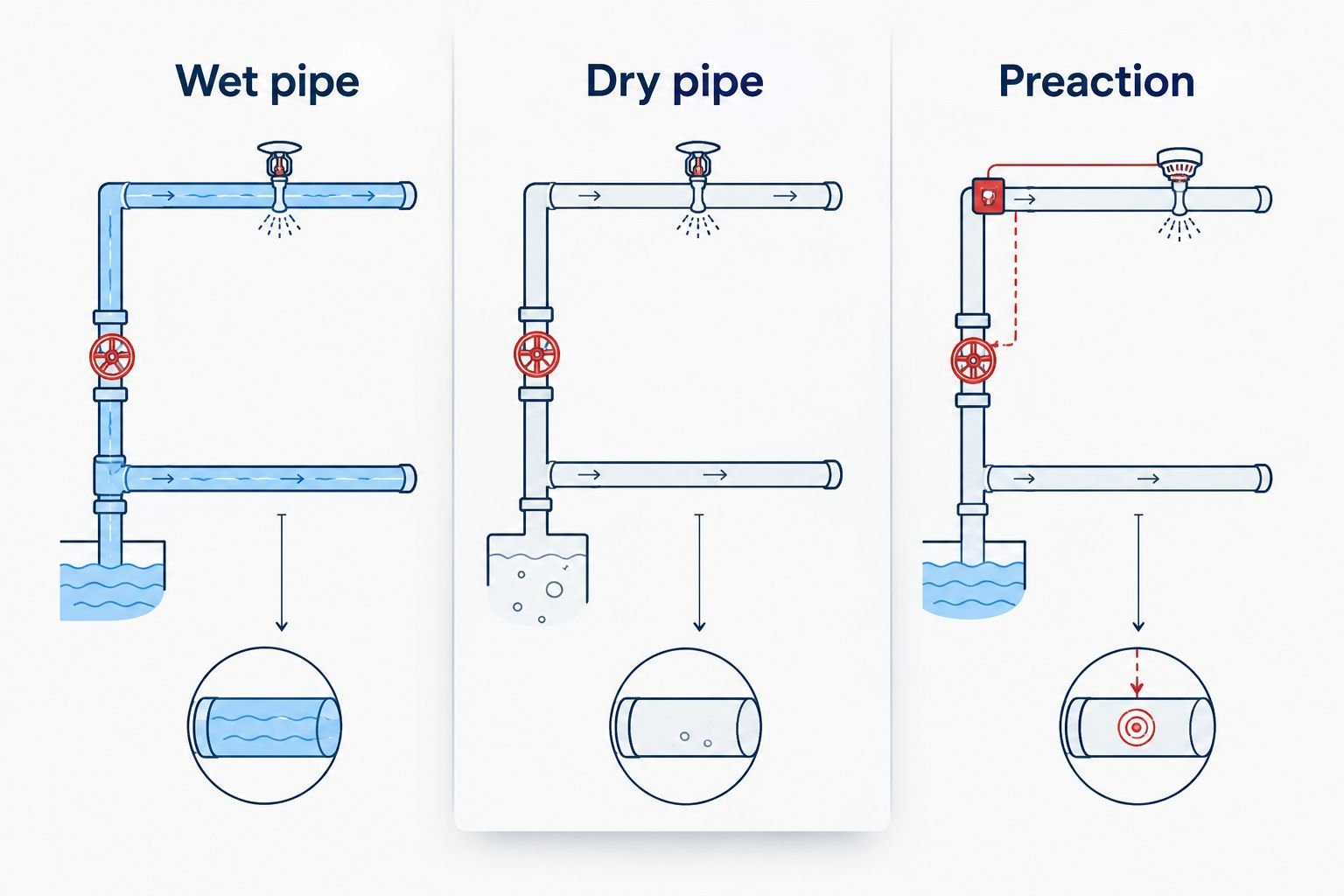
Select the arrangement by the conditions in each protected area, not by building type alone.
1. Wet-pipe fire sprinkler systems: best for conditioned offices
A wet-pipe fire sprinkler system keeps its piping filled with water under pressure. Heat opens an individual automatic fire sprinkler, allowing water to discharge at that location; ordinary smoke detection does not open every fire sprinkler in the building.
Best for: Office floors and associated spaces where the piping remains protected from freezing. Wet pipe is the default recommendation for conditioned offices because it avoids the air-release and detection-controlled water-admission sequences used by the other arrangements.
Wet-pipe fire sprinkler system pros
Water is present at the fire sprinkler before activation.
The arrangement does not require air evacuation before water reaches an operating fire sprinkler.
Water admission does not depend on a separate fire detection release sequence.
Fewer operating stages make the arrangement less complex than dry pipe or preaction.
Wet-pipe fire sprinkler system cons
Leaks or mechanical damage can release water because the piping is already filled.
Freezing exposure requires a different approved protection strategy.
Tenant renovations still require review of fire sprinkler placement and hydraulic design impacts.
Water freezes at 32°F (0°C). NFPA 13 uses 40°F (4°C) as a key temperature threshold for areas containing wet-pipe system piping, subject to its applicable provisions. Do not treat an occupied room's thermostat reading as proof that piping above a ceiling or near an exterior opening stays protected.
For a wet-pipe office system, examine ceiling changes and concealed conditions alongside the water supply. Adding a partition can obstruct discharge or create a room that needs different coverage, even when the existing piping remains untouched.
Verdict: Specify a wet-pipe fire sprinkler system for conditioned office areas when the approved design confirms freezing protection, coverage, and water-supply adequacy.
2. Dry-pipe fire sprinkler systems: best for freezing-exposed areas
A dry-pipe fire sprinkler system holds pressurized air or nitrogen downstream of its valve. When a fire sprinkler opens, pressure falls, the valve operates, and water enters the piping.
Best for: Areas of an office property where freezing exposure prevents a conventional wet-pipe arrangement. Evaluate the actual space; an unconditioned area does not automatically require dry pipe if it remains adequately protected from freezing.
Dry-pipe fire sprinkler system pros
Downstream piping is not continuously filled with water during normal service.
The arrangement addresses freezing exposure without heating every protected area.
It can protect a qualifying area without making every conditioned office floor a dry-pipe system.
Dry-pipe fire sprinkler system cons
Air must escape before water reaches the operating fire sprinkler.
Air-pressure equipment, valves, and associated devices add maintenance work.
Trapped water requires attention to pipe pitch, drainage, and auxiliary drains.
Dry pipe does not mean moisture-free piping. Condensation and water remaining after operation or testing make drainage part of the maintenance plan; neglecting low points can create freezing and corrosion problems.
Do not select dry pipe merely because the building contains computers or valuable furnishings. It is a freezing-protection arrangement, not a substitute for a documented assessment of water-damage concerns.
Verdict: Specify a dry-pipe fire sprinkler system where freezing exposure justifies it. Skip dry pipe as an unnecessary replacement for a suitable wet-pipe office system.
3. Preaction fire sprinkler systems: best for selected equipment rooms
A preaction fire sprinkler system uses a releasing arrangement to control water admission into the piping. In a single-interlock configuration, detection operates the valve; an individual fire sprinkler must still open for water to discharge through it.
Best for: Selected equipment rooms where the design establishes a need for detection-controlled water admission. Preaction is a specialized choice, not an automatic recommendation for every room containing servers.
Preaction fire sprinkler system pros
Water admission follows the specified releasing sequence rather than a simple wet-pipe arrangement.
Different interlock configurations allow the design to address defined operational requirements.
A selected room can receive specialized protection without extending the same complexity across ordinary office floors.
Preaction fire sprinkler system cons
Detection, releasing controls, valves, and supervisory functions add inspection and testing tasks.
Water-delivery behavior depends on the interlock configuration; double-interlock arrangements introduce additional operating conditions.
The system does not guarantee protection against every leak, water release, or equipment-loss scenario.
Require the design documents to name the configuration and describe its sequence of operation. A proposal that says only preaction leaves a critical operational question unanswered.
Also identify who maintains the detection and releasing equipment. A fire sprinkler contractor and a fire alarm contractor need clearly assigned responsibilities so that interface testing does not fall between separate service scopes.
Verdict: Specify a preaction fire sprinkler system only after the designer documents the need, operating sequence, water-delivery requirements, and maintenance responsibilities.
How these fire sprinkler systems rank
This 2026 ranking prioritizes suitability, operating simplicity, freezing protection, and maintenance burden. Wet pipe ranks first for conditioned office floors; dry pipe and preaction occupy distinct use cases rather than competing for the same default position.
What your office-building proposal must address
A system label is not a complete scope. Before authorizing work, require the proposal and design documents to address the following responsibilities.
Design basis
Identify the spaces protected, their uses, the water-supply basis, and the applicable design criteria. Flag storage rooms, equipment rooms, and other areas that need separate evaluation instead of assigning the entire property one office hazard classification.
Approval path
Identify the authority having jurisdiction and the required submittals. Miami-Dade and Broward County properties must follow the process applicable to their particular location; do not assume one fire authority's requirements apply to every South Florida address.
Impairment planning
If existing fire protection must be taken out of service, define the affected area, notification responsibilities, temporary precautions, and restoration process. Follow the applicable NFPA 25 impairment provisions and the fire authority's instructions rather than shutting a valve and treating the work as ordinary plumbing.
Testing and handover
Define acceptance testing, record drawings, operating information, and the inspection, testing, and maintenance responsibilities after installation. Keep those records accessible to building management and the contractors who service the system.
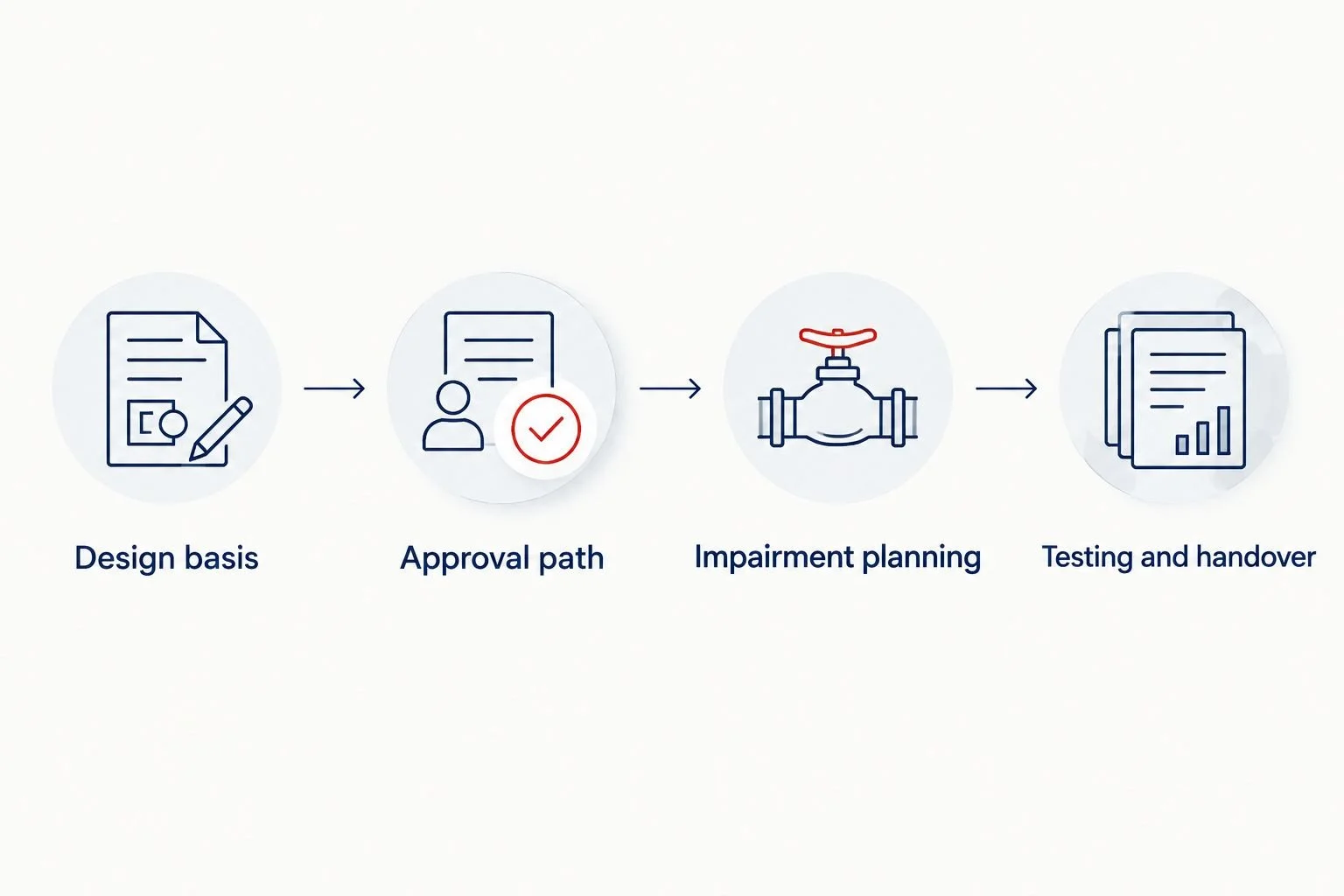
Define the design, approval, impairment, and handover responsibilities before work begins.
For an existing property, start with the latest inspection reports and approved drawings.
Review your office fire sprinkler scope
Discuss design, installation, inspection, testing, or repair for a Miami-Dade or South Florida property.
Which fire sprinkler system should you choose?
Choose wet pipe for conditioned office areas unless a documented condition requires another arrangement. For your 2026 project, separate freezing-exposed spaces and specialized equipment rooms from ordinary office floors before selecting alternatives.
Keep a suitable existing system when the approved design supports the building's current use. A tenant renovation does not automatically justify complete replacement, but it does require review of changes that affect coverage, obstructions, or design demand.
Ask Speedy Fire Protection to address your property's design, installation, inspection, testing, or repair scope. The next move is a site-specific assessment, not a manufacturer shopping list.
If you are planning a new installation, a tenant renovation, or need your existing system reviewed, contact us to schedule an assessment of your office building.
FAQ
What's the best fire sprinkler system for a typical office building?
A wet-pipe fire sprinkler system is the default choice for conditioned office areas protected from freezing. The final selection depends on the approved design, actual occupancy, water supply, and local requirements.
Is a dry-pipe fire sprinkler system better for office computers?
A dry-pipe fire sprinkler system is not the default choice for protecting office computers; its primary purpose is addressing freezing exposure. Evaluate any specialized water-admission requirement separately instead of choosing dry pipe simply because a room contains electronics.
Should every office server room have a preaction fire sprinkler system?
No, every office server room does not automatically need a preaction fire sprinkler system. A qualified designer must establish whether detection-controlled water admission is appropriate and identify the required interlock configuration.
Do all fire sprinklers activate when the fire alarm sounds?
No, ordinary automatic fire sprinklers open individually in response to heat, not simply because the fire alarm sounds. Specialized system arrangements have different operating sequences, so building staff should understand the installed system.
Does NFPA 25 determine the design of a new office fire sprinkler system?
No, NFPA 25 addresses inspection, testing, and maintenance of water-based fire protection systems. New fire sprinkler design follows the applicable installation standard, including NFPA 13, and locally adopted requirements.
Can one office building use wet-pipe and dry-pipe fire sprinkler systems?
Yes, one office building can use different fire sprinkler system arrangements in different areas when the approved design supports them. Conditioned offices and freezing-exposed areas do not have to use the same arrangement.
Do new office partitions require fire sprinkler review?
Yes, new partitions require review of their effect on fire sprinkler coverage and obstructions. Have the design reviewed before construction conceals piping or fixes the new ceiling layout.
One last thing
A functioning fire sprinkler system can still be poorly matched to a changed office layout. Before a 2026 tenant fit-out closes the ceiling, reconcile the proposed partitions, storage, and ceiling features with the fire sprinkler design. Correcting the drawings before concealment gives the project team a chance to resolve conflicts before they become finished-space problems.
Speedy Fire Protection is a Florida Licensed Fire Sprinkler Contractor (#FPC25-000020) serving Miami-Dade, Broward, Palm Beach, and surrounding South Florida counties. This article is for informational purposes only and does not constitute legal advice. Consult a licensed fire protection contractor and qualified legal counsel for guidance specific to your property.