Fire Sprinkler Head Replacement: When Heads Must Be Replaced, What It Costs, and What NFPA 25 Requires in Miami-Dade
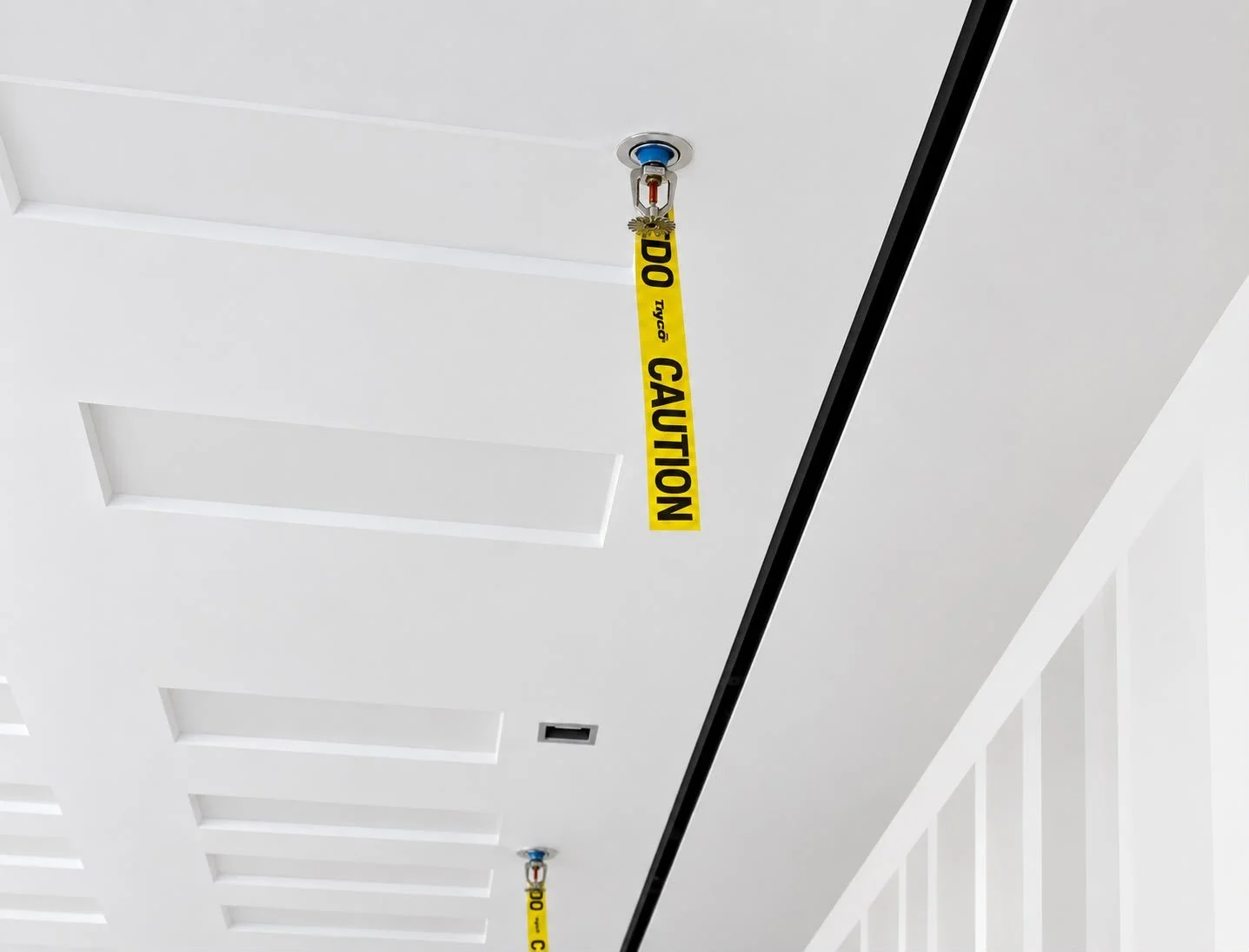
A painting crew finishes a lobby renovation in a Coral Gables office building and leaves behind fresh walls, a new ceiling color, and eleven fire sprinkler heads coated in the same eggshell white. Nobody notices until the annual inspection, when the technician writes up every one of them for replacement. The property manager asks whether they can be cleaned instead. The answer is no, and the reason is in the standard.
Fire sprinkler head replacement is the most common repair in commercial fire protection and the one owners most often try to avoid, defer, or do themselves. Each of those instincts runs into NFPA 25, which is specific about when a head must be replaced, and into Florida law, which is specific about who may do it.
This guide explains the conditions that require replacement, the age-based sample testing rules that trigger it at scale, what drives the cost, and how to handle it in a Miami-Dade building.
The Conditions That Require Replacement, Not Cleaning
NFPA 25 requires an annual inspection of sprinklers from the floor and requires replacement of any sprinkler showing the following conditions:
Leakage
Corrosion detrimental to performance
Physical damage
Loss of fluid in a glass bulb heat-responsive element
Loading with dust, grease, lint, or other material
Paint applied by anyone other than the manufacturer
Installation in the wrong orientation (a pendent head installed upright, for example)
Why paint cannot be cleaned off. A sprinkler's heat-responsive element is calibrated to a specific temperature. Paint insulates it and delays activation. Solvents that remove the paint can damage the element, the seal, or the deflector. NFPA 25 does not permit cleaning painted sprinklers; it requires replacement, and the Miami-Dade Fire Rescue sprinkler checklist lists painted and obstructed heads as inspection items.
Why loading matters. Grease on a kitchen head or dust on a warehouse head has the same insulating effect as paint, and grease is combustible.
Why corrosion matters. Corroded heads may fail to open, may open late, or may open with a distorted spray pattern. Heads in corrosive environments such as pool areas, cooling towers, and coastal exterior canopies are common replacement items in South Florida.
The Age Rules: When Every Head in an Area Comes Down
Sample testing at 50 years. Standard-response sprinklers that have been in service for 50 years must be replaced or have representative samples laboratory tested, with retesting every 10 years thereafter. A 1976 building reaches this threshold now.
Sample testing at 25 years. Fast-response sprinklers, which include quick-response and residential sprinklers, must be sample tested at 25 years under the 2023 edition (it was 20 years in earlier editions), with retesting every 10 years after.
Shorter intervals for special conditions. Sprinklers in harsh environments are tested at 5 years. Dry sprinklers are tested at 10 years. Extra-high temperature sprinklers are tested at 5 years.
If the sample fails, the area fails. When a representative sample does not pass laboratory testing, every sprinkler the sample represents must be replaced. This is how a single sample test becomes a project replacing hundreds of heads.
The 2026 edition adds a dwelling-unit rule. According to NFSA's overview of the key updates, sprinklers installed in dwelling units for 50 years must be replaced with fast-response sprinklers or sample-tested for thermal sensitivity. Once Florida adopts the 2026 edition, this will reach the older sprinklered residential towers in Miami Beach, Bal Harbour, and Coral Gables built in the 1970s.
Florida currently enforces the NFPA 25 edition referenced by the Florida Fire Prevention Code, 8th Edition, so confirm the applicable interval with your contractor.
What Fire Sprinkler Head Replacement Costs and Why
Owners searching for a per-head price find numbers ranging widely, and the range is real. The cost is set by five factors.
Head type. A standard spray pendent is inexpensive. ESFR storage heads, extended coverage heads, concealed heads with matching cover plates, and dry sprinklers cost several times more. Replacement must match the original in type, orifice, temperature rating, response characteristics, and K-factor, so the building's existing head dictates the part.
Access. A head in an 8-foot office ceiling is a ladder job. A head in a 30-foot warehouse ceiling requires a lift. A head above a hospital operating room requires infection control procedures and off-hours scheduling.
System shutdown. Replacing a head on a wet system requires draining the zone, which is an impairment under NFPA 25 with notification and fire watch obligations. Replacing many heads in one visit spreads that cost.
Quantity. A sample test failure that requires replacing 400 heads is priced very differently per head than replacing three painted ones.
Documentation. A licensed contractor documents the replacement so it can be attached to the inspection record and shown to the AHJ. Speedy's service and repair team quotes head replacement by type, access, and quantity, and includes the impairment procedure and documentation in the price.
Why an Owner or Handyman Cannot Replace Sprinkler Heads in Florida
The head is a listed fire protection component, and replacing it is fire protection contracting.
Under Florida Statute 633.336, engaging in fire protection contracting without a certificate from the State Fire Marshal is a second-degree misdemeanor, and the statute provides for an administrative fine of up to $10,000 per proceeding. The definition includes repair and alteration of sprinkler systems, and replacing heads is squarely within it.
There are practical reasons as well. A replacement head with the wrong K-factor or temperature rating changes the system's hydraulic performance. A head installed with the wrong wrench or over-torqued can crack the frame. A zone drained and refilled without proper venting traps air that accelerates corrosion. NFPA 25 also requires a stocked spare sprinkler cabinet on the premises so that replacements can be made promptly, and the State Fire Marshal's licensing page allows any owner to verify that the person doing the work holds certificate authority. Speedy's is FPC25-000020.
How to Stay Ahead of Fire Sprinkler Head Replacement
First, put sprinklers on the pre-renovation checklist. Before any painting, ceiling, or tenant improvement work, have the contractor bag or cover heads with the manufacturer-approved method and remove the covers immediately after. This single step prevents the most common replacement finding in Miami-Dade.
Second, find out how old your heads are. The year of manufacture is stamped on the deflector or frame. If the building is approaching 25 years (fast-response) or 50 years (standard), schedule sample testing before the inspection report forces it. Speedy's inspection and testing service records head age on every annual report.
Third, keep the spare sprinkler cabinet stocked. NFPA 25 requires a minimum number of spare heads by type and temperature plus the correct wrench. A stocked cabinet means a damaged head can be replaced the same day rather than after a parts order.
Fourth, replace heads in batches where possible. If the annual report lists several heads, replacing them in one scheduled visit with one impairment procedure costs less than three separate calls.
Paint, Corrosion, Damage, or Age: Replacement Is the Only Compliant Option
NFPA 25 requires fire sprinkler head replacement for leakage, corrosion, damage, loading, paint, and wrong orientation, and it requires sample testing at 25 or 50 years that can trigger replacement across an entire area. The cost is driven by head type, access, quantity, and the impairment procedure, and Florida law requires the work be done by a certified fire protection contractor.
If your building in Miami-Dade, Broward, or Palm Beach has heads flagged for replacement or is approaching a sample testing age, request a quote from Speedy Fire Protection. Our NICET Level III certified technicians replace, test, and document sprinkler heads under Florida license FPC25-000020.
Speedy Fire Protection is a Florida Licensed Fire Sprinkler Contractor (#FPC25-000020) serving Miami-Dade, Broward, Palm Beach, and surrounding South Florida counties. This article is for informational purposes only and does not constitute legal advice. Consult a licensed fire protection contractor and qualified legal counsel for guidance specific to your property.