Fire Sprinkler Inspection in Miami: What NFPA 25 Requires and What Miami-Dade Actually Enforces
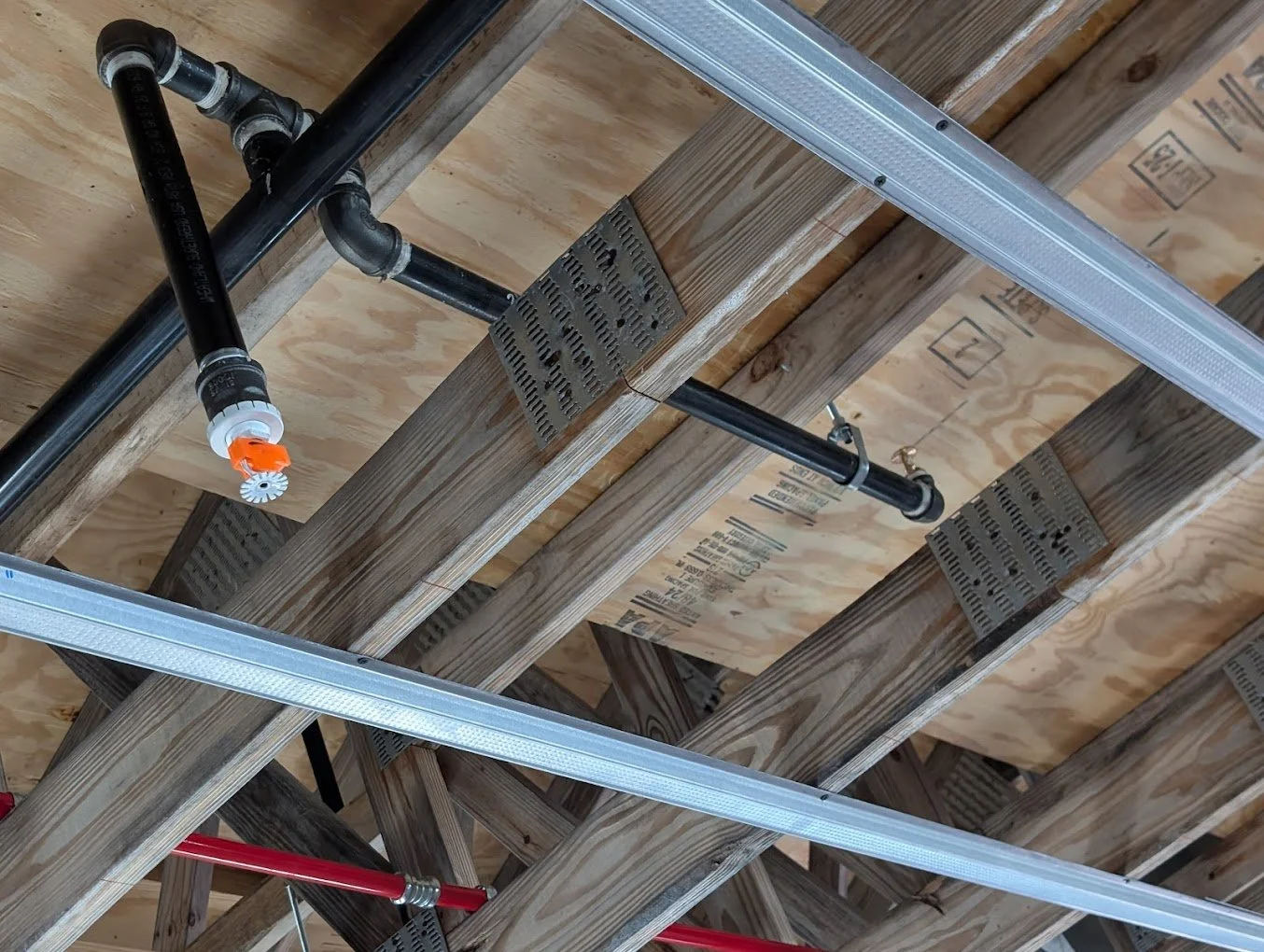
A property manager in Doral gets an annual renewal notice for the building's Life Safety Operating Permit and realizes nobody has scheduled the sprinkler inspection. The last report is fourteen months old. The tenant improvement work on the third floor moved four sprinkler heads and nobody documented it. That is a routine week in South Florida property management, and it is exactly the sequence that turns a five hundred dollar inspection into a permit hold.
A fire sprinkler inspection in Miami is not one event on a calendar. It is a layered schedule of weekly, monthly, quarterly, semiannual, annual, and multi-year tasks defined by NFPA 25,adopted into Florida law through the Florida Fire Prevention Code,and enforced locally by Miami-Dade Fire Rescue or your municipal fire prevention bureau. Understanding which layer you are behind on is the difference between a quick correction and a compliance problem that follows your building for a year.
This guide breaks down the actual schedule, what inspectors look for in Miami-Dade and Broward County, and what happens when a system fails.
Quick Answer
Annual inspection is the legal minimum for commercial and multi-family properties, but NFPA 25 also requires control valve checks on a weekly, monthly, or quarterly cycle depending on how the valve is supervised, quarterly alarm device testing, and five-year internal pipe inspections.
NFPA 25 has no retroactivity exemption. A system installed in 1988 is held to the current inspection standard, not the standard in effect when it was installed.
Miami-Dade requires an annual Life Safety Operating Permit for commercial and multi-family buildings. Single-family and two-family residences are exempt.
Sprinklers reduce the fire death rate by roughly 90 percent across all property types where they are present and operating, according to NFPA's 2024 research on sprinkler effectiveness.
Only a licensed contractor can perform the work. Florida law requires fire sprinkler inspection, testing, and maintenance to be performed by a state-certified fire protection contractor.
NFPA 25 Sets the Fire Sprinkler Inspection Schedule, Not Your Vendor
The most common misconception among South Florida building owners is that the annual inspection covers everything. It does not. NFPA 25 assigns different frequencies to different components based on how likely each one is to fail silently.
Control valves get checked weekly, monthly, or quarterly depending on how they are supervised. Valves that are only sealed require weekly inspection. Valves secured with locks may be inspected monthly. Valves that are electrically supervised, meaning a signal reports back to the fire alarm panel when a valve is closed, may be inspected quarterly. A closed control valve is the single most consequential failure in a sprinkler system because it silently disables everything downstream.
Gauges, alarm devices, and fire department connections run on quarterly cycles. Waterflow alarm devices must be tested quarterly to confirm the alarm actually reaches the panel and the monitoring service. Fire department connections are inspected quarterly for damage, missing caps, obstructions, and legible signage. A blocked or unmarked FDC in a Miami high-rise means arriving firefighters lose critical minutes.
The annual inspection is the comprehensive one. This covers sprinkler head condition, pipe and hanger integrity, main drain testing, antifreeze system testing where applicable, and a full walkthrough of the protected space. It generates the report your AHJ wants to see.
Five-year obligations catch owners off guard. NFPA 25 requires internal pipe inspection at five-year intervals to check for obstruction and corrosion, plus standpipe hydrostatic testing on the same cycle. These are budget items that do not appear on an annual invoice, and boards frequently have no line item reserved for them.
Why NFPA 25 Inspection in Florida Applies to Old Buildings Too
Building codes are generally prospective. The version in effect when you built is the version you were held to. Inspection, testing, and maintenance standards work differently. NFPA 25 governs the ongoing care of a system regardless of when it was installed, which means a 1970s warehouse in Hialeah and a 2024 tower in Brickell answer to the same inspection standard today.
That distinction matters in Miami-Dade because a large share of the commercial inventory predates modern sprinkler design standards. The system may have been perfectly compliant at installation and still generate deficiencies today, not because anything changed in the building, but because the inspection standard evolved and the system aged.
Florida adopts NFPA 25 through the Florida Fire Prevention Code, currently in its 8th Edition, which incorporates NFPA 1 and NFPA 101 with Florida-specific amendments. Florida law requires every county and municipality to enforce that code as the statewide minimum, and permits local jurisdictions to adopt more stringent requirements on top of it.
What a Failed Fire Sprinkler Inspection Costs in South Florida
The direct penalty is rarely the expensive part. Florida law attaches enforcement penalties to fire code violations, and treats knowingly leaving a fire protection system out of service far more seriously than an ordinary violation. Those are real, but they are not what usually hurts a building owner.
The costly consequences are downstream. An unresolved deficiency can hold up your Life Safety Operating Permit renewal, which can in turn affect your certificate of occupancy status. It can delay a tenant build-out that is waiting on fire final. And it can create an insurance problem, because many commercial property policies carry a protective safeguards endorsement, a clause that conditions coverage on maintaining fire protection systems in working order. Legal analysis of these endorsements shows they can be read to reduce or void coverage when the insured knew a system was impaired and did not correct it.
For high-rise residential buildings, the stakes are currently higher than usual. Florida's phased retrofit schedule required engineered design submitted by January 1, 2025, permits obtained by January 1, 2026, and full installation passing final AHJ inspection by January 1, 2027.Associations that are behind on that schedule have limited runway left.
How to Get Ahead of Your Next Fire Sprinkler Inspection in Miami
First, pull your last three inspection reports and read the deficiency sections. Not the cover page. Recurring deficiencies across multiple years signal either a system problem nobody addressed or a contractor copying forward prior reports. Both are problems.
Second, confirm your contractor's license is current. Verify the fire protection contractor certificate through the Florida State Fire Marshal's licensing division. An inspection performed by an uncertified party is not a valid inspection, and you are the one holding an invalid report.
Third, budget for the five-year items separately. Internal pipe inspection and standpipe hydrostatic testing are not annual costs. Put them in your reserve study so they do not arrive as a surprise assessment
Fourth, document every change to the protected space. New walls, new ceilings, relocated racking, and added storage all change sprinkler coverage. If tenant work altered the space, the system likely needs modification, which is design and installation work requiring a permit, not something to be handled during an inspection visit.
Frequently Asked Questions About Fire Sprinkler Inspection in Miami
How often does a commercial building in Miami-Dade need a fire sprinkler inspection?
The comprehensive inspection is annual, and that is what your Life Safety Operating Permit renewal depends on. NFPA 25 also requires more frequent checks on specific components: control valves on a weekly, monthly, or quarterly cycle depending on supervision, alarm devices and fire department connections quarterly, and internal pipe inspection every five years. An annual visit alone does not satisfy the full standard.
Can my maintenance staff perform the sprinkler inspection to save money?
No. Under Florida law, inspection, testing, and maintenance of fire sprinkler systems must be performed by a licensed fire protection contractor. Using unlicensed personnel creates real legal exposure and leaves you holding a report your AHJ will not accept. In-house staff can perform visual walkthroughs between inspections, which is genuinely useful, but that does not substitute for the certified inspection.
How long does a fire sprinkler inspection take?
A small commercial suite typically takes two to four hours. A mid-rise multi-family building generally runs a full day, and a high-rise with multiple zones, a fire pump, and standpipes can take several days. Buildings with poor documentation take longer because the inspector has to establish the system configuration before testing it.
Speedy Fire Protection is a Florida Licensed Fire Sprinkler Contractor (#FPC25-000020) with NICET Level III certification in inspection and testing of water-based systems. We have served Miami-Dade, Broward, and Palm Beach counties for more than 20 years, and we document every deficiency against its NFPA 25 citation so your report holds up with your AHJ and your insurance carrier.
Request an inspection or a compliance review at speedyfireprotection.com/contact-us.
Speedy Fire Protection is a Florida Licensed Fire Sprinkler Contractor (#FPC25-000020) serving Miami-Dade, Broward, Palm Beach, and surrounding South Florida counties. This article is for informational purposes only and does not constitute legal advice. Consult a licensed fire protection contractor and qualified legal counsel for guidance specific to your property.