
How Long Does Fire Sprinkler Installation Take? 2026
Fire sprinkler system installation takes as long as the project’s design, on-site work, testing, and applicable inspections require; there is no reliable duration that fits every building. For a 2026 project, ask for a schedule that separates those stages. Installed pipework is not the same as a system ready for use.
TL;DR
How long does fire sprinkler system installation take? There is no fixed duration; building scope and approval steps determine the schedule.
A 2026 installation schedule should separate design, on-site work, testing, and applicable inspections.
Speedy Fire Protection is best for South Florida property teams coordinating sprinkler design, installation, inspection, and testing.
Why this matters
A single completion date hides the point where delays occur. If you manage a property in Miami-Dade or elsewhere in South Florida, ask which work must finish before installers can start, which areas need access, and what remains after the last sprinkler head is in place.
Speedy Fire Protection provides fire sprinkler design, installation, inspection, and testing services. That makes it relevant when you need one project schedule covering those separate activities. Do not treat the end of on-site installation as the end of the project.
How long does fire sprinkler system installation take?
There is no fixed installation period supported by the building type alone. A 2026 schedule needs to identify the work included in the question: design and approvals, physical installation, testing, and any inspection or correction that follows. Ask for a date or duration for each stage rather than accepting one date labeled installation complete.
Define the installation scope. Identify the building and the areas receiving sprinkler work. Confirm whether the schedule covers a new system or work on an existing one.
Establish the design and approval path. Ask what design information is needed, who reviews the plans, and which approvals apply before on-site work proceeds.
Schedule on-site work by area. Confirm when installers can reach each work area and how sprinkler work fits around other construction or building operations.
Reserve time for testing. Ask what testing is included and whether any findings would require correction and another test.
Confirm the inspection and closeout path. Identify the fire authority’s applicable requirements and the event that marks the project complete for your property.
This sequence is a planning checklist, not a promise that every project follows an identical approval route. For a usable answer to how long does fire sprinkler system installation take, request a schedule showing dependencies: what must happen before the next stage can begin.
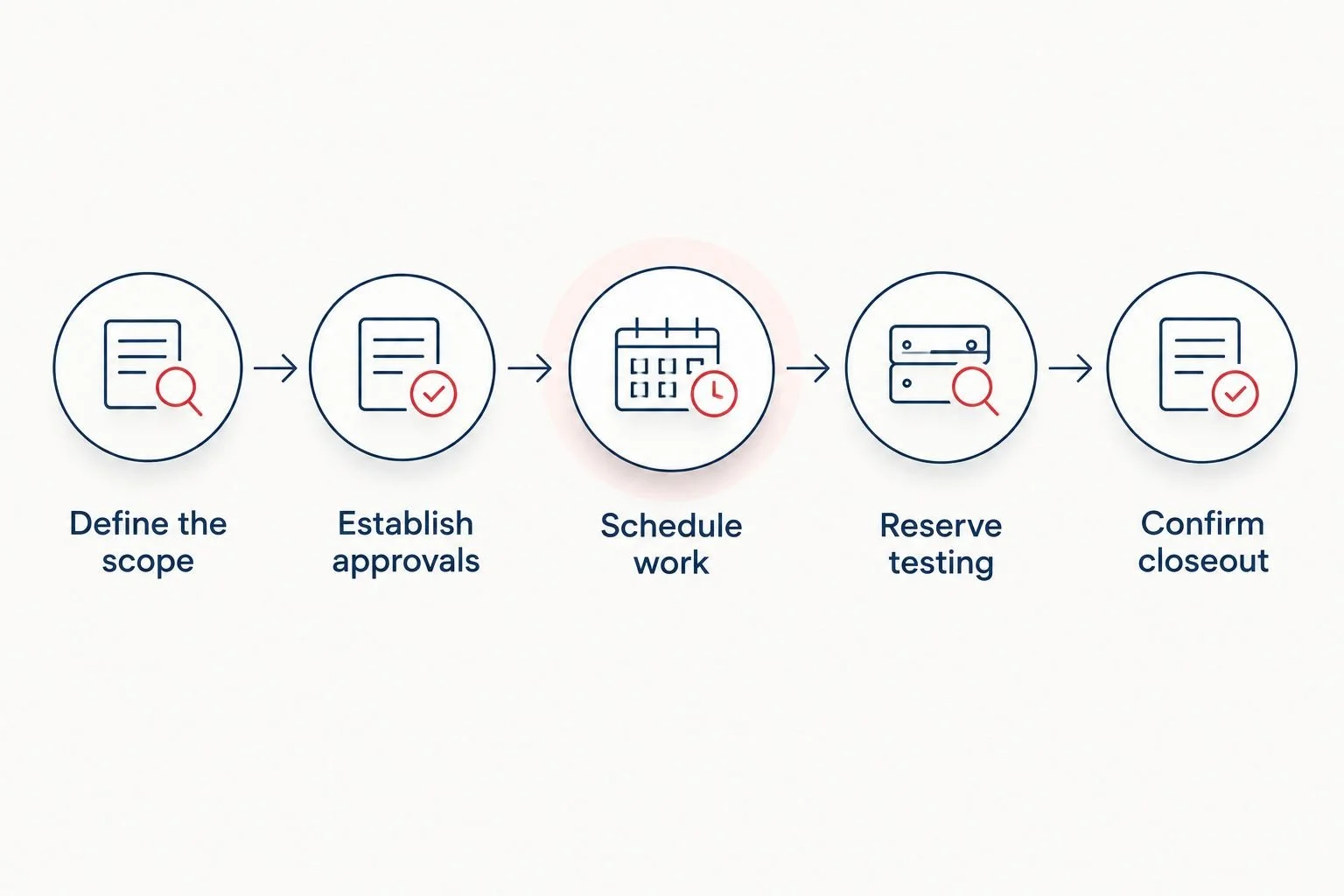
A completion date is useful only when the work before and after installation is accounted for.
What to ask when someone gives you a completion date
Ask whether the date means the last day of pipe and sprinkler installation, the end of testing, or completion of applicable inspections. Those are different milestones. If the answer is unclear, the date cannot tell you when the building will have a completed project.
Then ask what the date assumes: access to work areas, a settled design, other trades completing their work, and availability for required reviews or inspections. Put those assumptions beside the schedule. If one changes, you can identify which milestone needs a new date instead of losing sight of the entire project.
Why installation time varies
The factors below affect the sequence and amount of work. None supports a universal duration on its own.
Building use. Commercial, residential, healthcare, educational, hospitality, and government properties present different spaces and operating constraints. Tell the installer which areas must remain in use while work is planned.
Design scope. The schedule depends on the sprinkler work being designed. Confirm the areas covered and whether the design is settled before treating an installation start date as firm.
On-site access. Installers need access to the areas in the approved scope. Ask how occupied rooms, other construction activity, and access restrictions appear in the work schedule.
Testing and findings. Physical installation is followed by testing within the project scope. A finding that requires correction adds work before the affected stage is complete.
Applicable inspection requirements. Ask which fire authority reviews or inspections apply to the property and when they are expected. Do not assume the same closeout path for every South Florida address.
For a 2026 project, compare schedules using the same endpoint. A contractor describing the end of on-site work and another describing completion after applicable inspections are not answering the same question.
Does design count toward installation time?
Count design when you are planning from project start to completion; separate it when you are measuring only on-site installation. Fire sprinkler design and physical installation are distinct activities. A schedule that begins when installers arrive leaves out the work needed to establish what they will install.
Ask for both milestones in 2026: when the installation scope and design are ready for the next step, and when on-site work is expected to finish. That distinction gives your construction team or property staff a clearer basis for planning access.
NFPA 13 is a reference for sprinkler system design and installation. Use the applicable design documents and local review requirements for your project rather than treating a general article as a substitute for an approved plan. Speedy Fire Protection’s fire sprinkler design and installation services are relevant when those stages need to be coordinated, but a service list alone cannot establish your building’s duration.
Is the system finished when installers leave?
No. Confirm what testing, inspection, correction, and closeout remain within the project scope. The departure of an installation crew establishes that on-site installation work has ended; it does not, by itself, establish that every project requirement has been completed.
For an existing sprinkler system, do not confuse new installation work with the ongoing inspection, testing, and maintenance addressed by NFPA 25. Ask the responsible contractor to distinguish the installation closeout from later maintenance obligations. That keeps a 2026 installation schedule from being mistaken for a plan covering the system’s entire service life.
Keep the closeout question concrete: What evidence or approval will tell us this project is complete? Get the answer for the property and its applicable fire authority. Do not assume that a test, an inspection, and an approval are interchangeable.
What should you do if the schedule slips?
Find the delayed milestone before setting a new completion date. Ask whether the change concerns design, access, on-site installation, testing, corrections, or an applicable inspection. A revised date without that explanation does not tell you what needs to happen next.
If the work affects an occupied building, ask which areas and systems are affected and who is responsible for communicating the change to building staff and other parties involved. Do not operate valves or change a sprinkler system’s status based on a general installation timeline. Follow the property’s procedures and the direction of the responsible fire protection professionals and fire authority.
In 2026, a useful update names the unfinished work and its next dependency. For example, if testing has not occurred, ask what must be completed before it can be scheduled. That question produces a practical next step without inventing a new finish date.
FAQ
How long does fire sprinkler system installation take in 2026?
There is no fixed duration that applies to every building in 2026. Request separate milestones for design, on-site installation, testing, and applicable inspections to establish your project’s timeline.
Does the installation timeline include sprinkler system design?
Only if the schedule explicitly includes design. Ask where the schedule starts so you do not mistake an on-site work period for the full project timeline.
Is a fire sprinkler installation complete after the pipework is installed?
Not necessarily. Ask what testing, corrections, inspections, and closeout steps remain for the property before treating installation as complete.
What can delay fire sprinkler installation in an occupied building?
Access to work areas and coordination with building operations can affect the schedule. Identify those restrictions when the installation work is planned.
Does NFPA 25 set the installation schedule?
No. NFPA 25 addresses inspection, testing, and maintenance of water-based fire protection systems; NFPA 13 addresses sprinkler system design and installation.
Who confirms the inspection requirements for a South Florida sprinkler project?
Confirm the applicable requirements with the project team and the relevant fire authority. The required path depends on the property and the work being performed.
One last thing
The most useful answer is not a single duration. It is a schedule with a defined start, a defined completion milestone, and the work between them. For your 2026 project, ask Speedy Fire Protection to separate design, installation, testing, and applicable inspection steps before you commit to a building handover date.