Fire Suppression System Inspection: Every System in Your Miami-Dade Building and Who Is Legally Responsible for Each
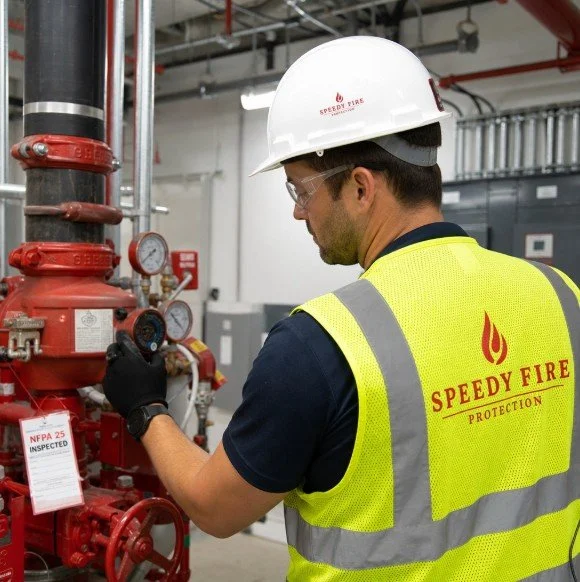
A property manager in Kendall receives three separate invoices in one month: one from a sprinkler contractor, one from a kitchen hood company, and one from the fire alarm vendor. Each says "annual inspection." The owner asks a reasonable question: are these the same thing, and if not, how many more are there? Two months later, a Miami-Dade Fire Rescue inspector cites the building for an untested clean agent system in the server room that none of the three vendors had touched.
Fire suppression system inspection is not one service. A typical Miami-Dade commercial building has four to seven distinct fire protection systems, each governed by a different NFPA standard, each on a different schedule, and each performed by a different license. The owner is responsible for all of them, and the gaps between vendors are where buildings fail.
This guide lists every system a South Florida commercial building is likely to have, the standard and interval that govern its inspection, which license is required, and how to organize them so nothing falls between contractors.
Water-Based Systems: Sprinklers, Standpipes, Fire Pumps, and Backflow Preventers
The largest group of systems in most buildings shares one standard. NFPA 25 governs the inspection, testing, and maintenance of every water-based fire protection system: wet, dry, preaction, and deluge sprinklers, standpipes and hose systems, fire pumps, water storage tanks, private fire service mains, and the backflow preventers that protect the supply.
Intervals run from weekly control valve and pump checks through quarterly alarm device tests, the annual full inspection, and five-year internal pipe assessments and standpipe hydrostatic tests. Our NFPA 25 compliance guide for Florida property managers walks through each interval.
License required. Under Florida Statute 633.336, only a contractor holding a Fire Protection Contractor certificate from the State Fire Marshal may inspect, test, or repair these systems. Speedy Fire Protection holds certificate FPC25-000020 and performs inspection and testing across all water-based systems.
Where buildings fall short. The water-based systems are usually the best covered, because most owners have a sprinkler contractor. The gaps appear in the long-interval items and in fire pump logs, which are covered in detail elsewhere on this blog.
Fire Alarm and Detection: The System That Tells Everyone Else to Act
Fire alarm systems are governed by NFPA 72, the National Fire Alarm and Signaling Code, and they are inspected and tested on their own schedule by a separately licensed fire alarm contractor.
The interface is the risk. The sprinkler system's waterflow switches, tamper switches, and fire pump supervisory signals all report through the fire alarm panel. The sprinkler contractor tests that the switch activates. The alarm contractor tests that the panel receives and transmits it. When the two vendors do not coordinate, a switch can pass its test on one report and fail to transmit on the other, and neither vendor is technically wrong.
Practical rule. Schedule the quarterly sprinkler alarm device test and the fire alarm inspection on the same day, or require each vendor to confirm the signal reached the monitoring station. The Miami-Dade Fire Rescue sprinkler checklist includes supervisory and waterflow items that assume the whole chain works.
Special Hazard Systems: Kitchen Hoods, Clean Agent, and Foam
These are the systems most likely to be missed, because they are in specific rooms and often installed by the equipment vendor rather than the building's fire protection contractor.
Commercial kitchen hood suppression. Restaurants, hotel kitchens, hospital cafeterias, and school cafeterias have wet chemical systems under the hood governed by NFPA 17A and NFPA 96. They require semiannual inspection and periodic cartridge or cylinder replacement. In a mixed-use building in Miami-Dade, the restaurant tenant often assumes the landlord handles it, and the landlord assumes the reverse.
Clean agent systems. Server rooms, data centers, records rooms, and electrical rooms often have gaseous suppression systems (inert gas, FK-5-1-12, or similar) governed by NFPA 2001. They require semiannual agent quantity and pressure checks, annual inspections, and enclosure integrity testing. The building owner is responsible even when the tenant's IT department installed the system.
Foam and specialty systems. Aircraft hangars, fuel storage, and some industrial occupancies near Miami International Airport carry foam systems with their own testing under NFPA 11 and NFPA 25 Chapter 11.
Portable extinguishers. Governed by NFPA 10, extinguishers require monthly visual checks (which on-site staff can perform) and annual maintenance by a licensed extinguisher company. They are the single most commonly cited item on Miami-Dade life safety inspections because there are so many of them.
Who Is Legally Responsible, and Why It Is Not the Contractor
Every one of these standards places responsibility on the same party.
NFPA 25 Chapter 4 makes the property owner or designated representative responsible for ensuring inspection, testing, and maintenance are performed, for correcting deficiencies, and for maintaining records. NFPA 72, NFPA 10, NFPA 17A, and NFPA 2001 contain equivalent language. Hiring a contractor delegates the work, not the obligation.
Florida law reinforces it. Under Florida Statute 633.124, a violation of the Florida Fire Prevention Code is a second-degree misdemeanor, and willfully rendering a fire protection system inoperable is a first-degree misdemeanor. The statute does not ask whose vendor missed the item.
The annual permit checks all of it. The Miami-Dade Life Safety Operating Permit inspection covers every system in the building, not just sprinklers. An inspector who finds a current sprinkler tag, an expired extinguisher tag, and no record for the clean agent system writes up two of the three.
Leases can shift cost, not liability. A lease that requires a restaurant tenant to maintain the hood system is enforceable between landlord and tenant. It does not change who the fire marshal cites. Raul J. Muniz, Esq., a Florida licensed attorney on Speedy's team, works with owners on how these obligations should be allocated in leases and vendor agreements, and Speedy's training and consulting service helps building staff understand the full inventory.
How to Stay Ahead of Every Fire Suppression System Inspection in Your Building
First, inventory every system. Walk the building with a floor plan and list each: sprinkler zones, standpipes, fire pump, backflow preventers, fire alarm panel, kitchen hoods, clean agent rooms, foam systems, and extinguisher locations. Most owners find at least one system they did not know they had.
Second, assign a standard, interval, and vendor to each line. A single spreadsheet with system, governing NFPA standard, required intervals, current vendor, license number, last inspection date, and next due date is the compliance document Miami-Dade inspectors respond to.
Third, coordinate the interfaces. Sprinkler alarm devices and the fire alarm panel, clean agent releases and detection, kitchen hood systems and gas shutoffs. Schedule the vendors together or require written confirmation that the signal path was tested end to end.
Fourth, verify every license. Sprinkler, standpipe, pump, and backflow work requires a Fire Protection Contractor certificate verifiable on the State Fire Marshal's licensing page. Fire alarm, extinguisher, and hood work each require their own. A vendor working outside their license produces a record the AHJ will not accept.
Four to Seven Systems, One Responsible Party
Fire suppression system inspection in a Miami-Dade commercial building means sprinklers, standpipes, pumps, and backflow under NFPA 25, alarms under NFPA 72, hoods under NFPA 17A and 96, clean agent under NFPA 2001, and extinguishers under NFPA 10, each on its own schedule and each by its own license. The owner is responsible for all of them, Florida law enforces that with criminal penalties, and the annual permit inspection checks every one.
If you own or manage a building in Miami-Dade, Broward, or Palm Beach and want a single inventory and schedule for the water-based systems, request a quote from Speedy Fire Protection. Our NICET Level III certified team inspects, tests, and repairs sprinklers, standpipes, fire pumps, and backflow preventers under Florida license FPC25-000020.
Speedy Fire Protection is a Florida Licensed Fire Sprinkler Contractor (#FPC25-000020) serving Miami-Dade, Broward, Palm Beach, and surrounding South Florida counties. This article is for informational purposes only and does not constitute legal advice. Consult a licensed fire protection contractor and qualified legal counsel for guidance specific to your property.