Warehouse Fire Sprinkler Requirements in Doral: Why Inspection, Testing, and Maintenance Cannot Wait as Buildings Change Hands
On August 28, 2026, a 14-property industrial portfolio along NW 54th Street, NW 56th Street, NW 79th Avenue, and NW 82nd Avenue in Doral sold for $86 million, roughly $296 per square foot and near a record for Miami-Dade County. The buildings were developed and managed by one family for decades. Many of the units are between 600 and 2,500 square feet, subdivided for small tenants.
That transaction is a snapshot of what is happening across Doral's warehouse market. Older buildings with original fire sprinkler systems are changing hands, being subdivided, and being filled with tenants whose inventory looks nothing like what the system was designed for. Warehouse fire sprinkler requirements in Doral are not a formality in that environment. It is the only way to know whether a 30-year-old system can still protect a 2026 tenant.
This guide covers what NFPA 25 requires of warehouse owners, why storage arrangements matter more than most owners realize, and how Miami-Dade enforces it.
Doral Is Miami-Dade's Warehouse Capital, and Most of the Inventory Is Not New
Doral, often called Airport West, sits between Miami International Airport, the Palmetto Expressway, and the Turnpike. Local market coverage describes warehouse space in the submarket ranging from 5,000 to more than 500,000 square feet with 24 to 30-foot clear heights in the newer product, and older small-bay buildings with lower ceilings throughout the established corridors.
Countywide, Miami-Dade industrial vacancy rose to 7.7 percent in the second quarter of 2026, with about 3 million square feet leased during the quarter. More availability means more tenant turnover, and every turnover is a chance for the occupancy hazard in a building to change without anyone updating the fire protection.
The building type is the risk factor. A sprinkler system designed for an Ordinary Hazard warehouse storing boxed paper goods on the floor is not designed for rack storage of plastics or lithium-ion batteries. The difference is not academic. It is the difference between a system that controls a fire and one that is overwhelmed in minutes.
What NFPA 25 Requires in a Warehouse and Why Warehouses Fail It
NFPA 25, the Standard for the Inspection, Testing, and Maintenance of Water-Based Fire Protection Systems, applies to every sprinkler, valve, and fire pump in the building regardless of occupancy. But warehouses fail specific line items more than any other building type.
Sprinkler clearance is the most common violation. NFPA 25 requires an annual inspection of sprinklers from the floor, and one of the items checked is whether storage is stacked too close to the deflectors. Standard spray sprinklers need at least 18 inches of clearance below the deflector, and some storage sprinklers need more. In a warehouse where every cubic foot is revenue, this is violated constantly. The Miami-Dade Fire Rescue sprinkler checklist that inspectors carry during permit visits lists clearance and obstruction items explicitly.
Control valves get shut and forgotten. Warehouses have more mechanical activity, more contractors, and more tenant changes than office buildings. NFPA's 2024 research found that the leading reason sprinklers fail to operate in a fire is that the system was shut off. Weekly or monthly valve inspections, depending on whether the valve is electronically supervised, exist to catch this.
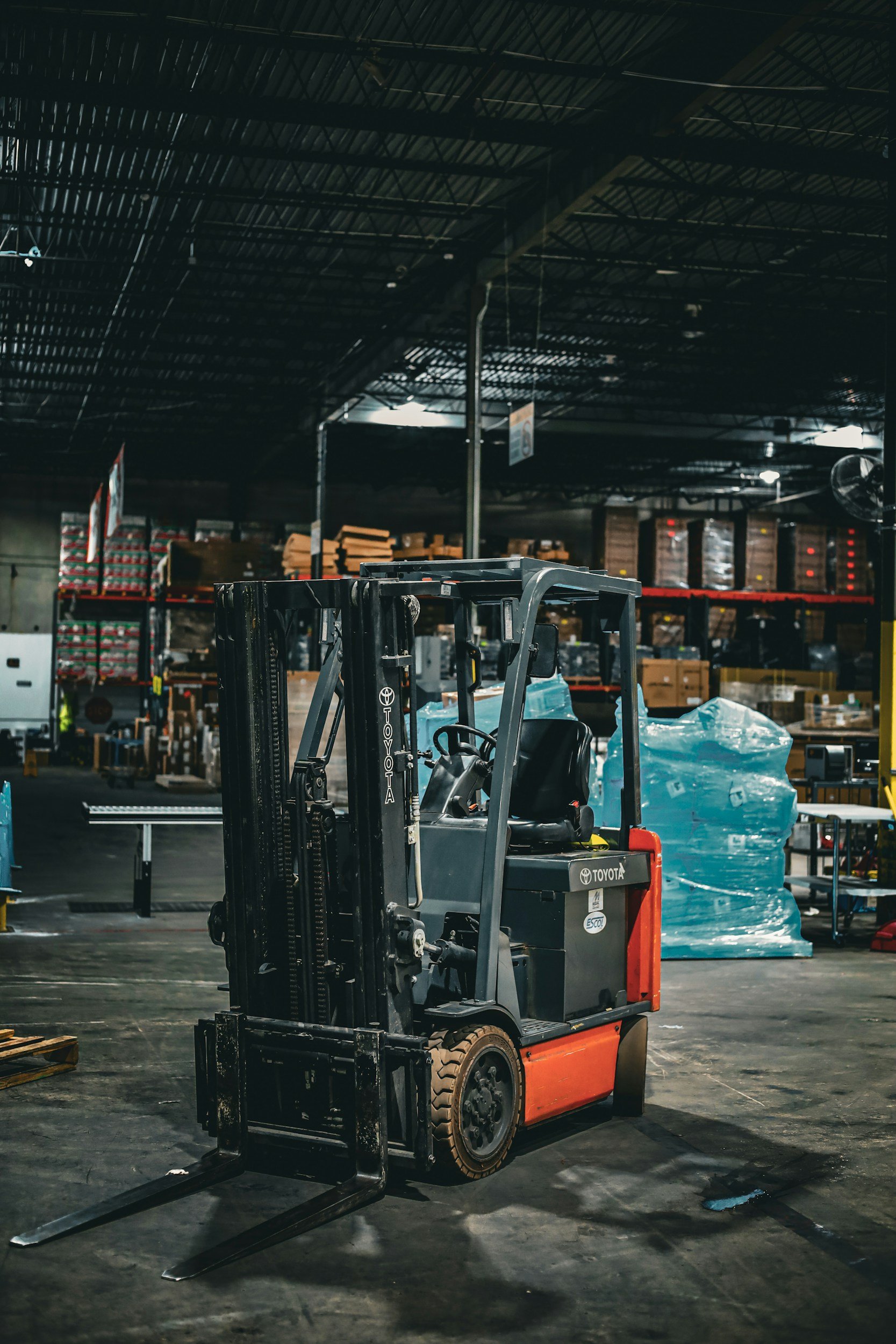
Loading dock damage is chronic. Forklifts hit branch lines, hangers, and drops near dock doors. A bent pipe or a sheared hanger may not leak immediately but changes the load on the system and can fail under pressure surge.
Dry systems in cold storage seize. Doral has a meaningful concentration of food distribution and cold storage tied to airport cargo. Dry pipe and preaction systems protecting freezers require trip tests and, under the 2026 edition of NFPA 25, annual internal valve inspections. These are missed far more often than wet system items.
Storage Changes Are Design Changes, Not Maintenance Issues
The biggest warehouse risk in Doral is not a failed component. It is a system that is fully functional and still inadequate because the tenant changed what is stored and how.
NFPA 13 classifies storage by commodity (Class I through IV and Group A, B, or C plastics), storage height, storage arrangement (floor piled, palletized, solid shelving, or rack), and ceiling height. Each combination drives a required water density and sometimes a specific sprinkler type such as ESFR or CMSA heads.
Common triggers in Doral warehouses include:
A tenant installs racking in a building designed for floor storage.
Storage height increases from 12 feet to 20 feet under the same ceiling.
Commodity shifts from cartoned paper to expanded plastics, foam packaging, or aerosols.
Solid shelving is added to racks, blocking water penetration.
Lithium-ion battery inventory arrives, which NFPA treats as a special hazard.
Any of these can push a system past its design basis. NFPA 25 Chapter 4 requires an owner to have the system evaluated when occupancy, use, process, materials, hazard, or water supply changes. That evaluation is engineering, not inspection, and it is the reason Speedy's design and installation team is often called in after an inspection flags a mismatch.
How Miami-Dade Enforces Warehouse Fire Protection
Doral is an incorporated city with its own fire prevention function operating within the Miami-Dade Fire Rescue framework, and the county's requirements apply broadly across the industrial corridors.
The annual Life Safety Operating Permit. Every commercial building in the Miami-Dade Fire Rescue jurisdiction must obtain an annual Life Safety Operating Permit. The inspection that accompanies it is where warehouse sprinkler deficiencies get written up, and a building cannot clear the permit with open sprinkler violations.
The state penalty structure. Under Florida Statute 633.124, violations of the Florida Fire Prevention Code are second-degree misdemeanors, and willfully rendering a fire protection system inoperable is a first-degree misdemeanor. A valve closed to stop a leak and left closed for months can cross that line.
Insurance sits on top of both. Many warehouse property policies carry protective safeguards endorsements that condition coverage on the sprinkler system being maintained. A fire loss in a building with a documented lapse in NFPA 25 compliance is a coverage dispute waiting to happen.
How to Stay Ahead of Warehouse Sprinkler Requirements in Doral
First, pull the design basis before you sign a lease or close a purchase. The hydraulic nameplate on the riser and the original permit drawings tell you the hazard classification and design density. If a broker cannot produce them, budget for an engineering evaluation. Speedy's inspection and testing service includes documenting the nameplate data on every report.
Second, write storage limits into tenant leases. Specify maximum storage height, prohibited commodities, and a requirement that tenants notify the owner before installing racking. This converts an NFPA 13 problem into a lease enforcement problem, which is far easier to manage.
Third, put valve checks on a weekly schedule. Assign a named person to walk every control valve and confirm it is open and locked. It takes ten minutes and eliminates the single largest cause of sprinkler failure.
Fourth, repair dock-area damage as it happens. Bent pipe, missing hangers, and damaged heads near loading docks should go to a licensed repair contractor within days, not at the next annual inspection.
Doral's Warehouses Are Changing Hands. Their Sprinkler Systems Are Not Getting Younger
Doral's industrial market is active, and the buildings trading today were built for tenants who no longer occupy them. NFPA 25 requires owners to inspect, test, and maintain the system on a fixed schedule and to re-evaluate it whenever the hazard changes. Miami-Dade enforces both through the annual Life Safety Operating Permit, and Florida law backs it with criminal penalties.
If you own or manage warehouse space in Doral, Medley, Hialeah, or anywhere in Miami-Dade, and you are not certain your system matches what is stored under it, request an inspection quote from Speedy Fire Protection. Our team has worked in Miami-Dade's industrial corridors since 2005 under Florida license FPC25-000020.
Speedy Fire Protection is a Florida Licensed Fire Sprinkler Contractor (#FPC25-000020) serving Miami-Dade, Broward, Palm Beach, and surrounding South Florida counties. This article is for informational purposes only and does not constitute legal advice. Consult a licensed fire protection contractor and qualified legal counsel for guidance specific to your property.