
Convert Dry Pipe Sprinkler System to Wet Pipe? Yes | 2026
Yes, you can convert a dry pipe sprinkler system to wet pipe if every pipe in the converted area can be protected from freezing and the modified system meets the applicable design and approval requirements. In 2026, the decision turns on the coldest exposed section of piping, not the temperature of the main occupied space. A valve change alone does not establish that the system is safe to operate wet.
TL;DR
You can convert dry pipe sprinkler system to wet pipe only when the converted piping can remain protected from freezing.
Speedy Fire Protection is a fit for Miami-Dade owners who need a sprinkler conversion assessment, not a valve-only fix.
Check concealed spaces, loading areas and any other exposed piping before choosing wet pipe.
In 2026, confirm the design and impairment plan with the fire authority before work begins.
Can you convert a dry pipe sprinkler system to wet pipe?
Yes, but only after a section-by-section review of freeze exposure, system design and approval requirements. A dry pipe system holds pressurized air or nitrogen in the piping; water enters after a sprinkler operates and the dry valve opens. A wet pipe system keeps water in the piping. That difference makes temperature control the deciding issue.
If you are weighing the systems before requesting a conversion, the wet pipe vs dry pipe fire sprinkler systems guide covers the basic choice. For an existing building, use the following sequence to decide whether that choice is available at all:
Identify the exact area served. Trace the dry system from its valve through branch lines, drops and sprinkler heads. Do not assume the occupied rooms show where every pipe runs.
Find every freeze exposure. Check concealed spaces, exterior-adjacent rooms, loading areas and any unconditioned section. Water freezes at 32°F (0°C); an exposed branch can defeat an otherwise suitable conversion.
Confirm how each space stays warm. NFPA 13 generally calls for wet sprinkler piping to be maintained at 40°F (4°C) or higher unless an approved means prevents freezing. Confirm the condition throughout the year, not just during a site visit.
Review the existing design. The conversion requires a review of the supply, piping, valves, alarms and hydraulic design against the proposed wet configuration. The fact that a dry system already protects the area does not establish that its wet conversion has been designed or approved.
Plan the impairment. Changing the system takes protection out of service while work is performed. Assign responsibility for notifications and temporary precautions before anyone closes a valve.
Confirm approval and acceptance. Submit the proposed change through the applicable fire authority process and complete the required inspections and tests before treating the wet system as operational.
This is a design change, not a maintenance shortcut. In 2026, an owner deciding between conversion and repair needs a documented answer to one question first: Can water remain in every pipe served by the proposed wet system without freezing?
Why this matters
A warm lobby does not tell you whether a branch line crosses an unconditioned ceiling or reaches a loading area. Once converted, those pipes contain water continuously. A frozen section can obstruct sprinkler flow or damage piping, while an unplanned shutdown leaves the building without its normal sprinkler protection.
Miami-Dade and Broward County owners also need to distinguish a proposed system alteration from routine maintenance. NFPA 13 governs sprinkler system installation and design; NFPA 25 addresses inspection, testing and maintenance of systems in service. Speedy Fire Protection is a fit for South Florida owners who need the existing layout reviewed before choosing a wet pipe conversion. The service is relevant after the exposure and design questions are defined, not as a substitute for them.
Keep dry pipe, convert to wet pipe, or separate the exposure?
The right answer can differ between parts of the same property. Use the table to frame the design discussion; it does not replace an assessment of the installed system.
Keep the dry pipe system
Best for: Areas where piping remains exposed to freezing
Advantage: Keeps water out of the piping until system operation
Limitation to resolve: The existing dry valve, air supply and piping still require inspection, testing and maintenance
Convert the served area to wet pipe
Best for: Areas where all affected piping can remain protected from freezing
Advantage: Removes the need for a dry valve and pressurized air in the converted area
Limitation to resolve: Requires design review, an impairment plan and approval of the alteration
Retain dry protection for an exposed area
Best for: Buildings with both protected and freeze-exposed spaces
Advantage: Keeps the freeze decision tied to the actual piping location
Limitation to resolve: Requires a design that clearly defines what each system serves
Best for a wholly protected area: assess wet pipe conversion. Best for an area with unresolved freeze exposure: retain dry protection while the design is reviewed. Do not choose a system type from the building address or occupancy alone. A hotel, warehouse or condominium can have both conditioned rooms and exposed service spaces.
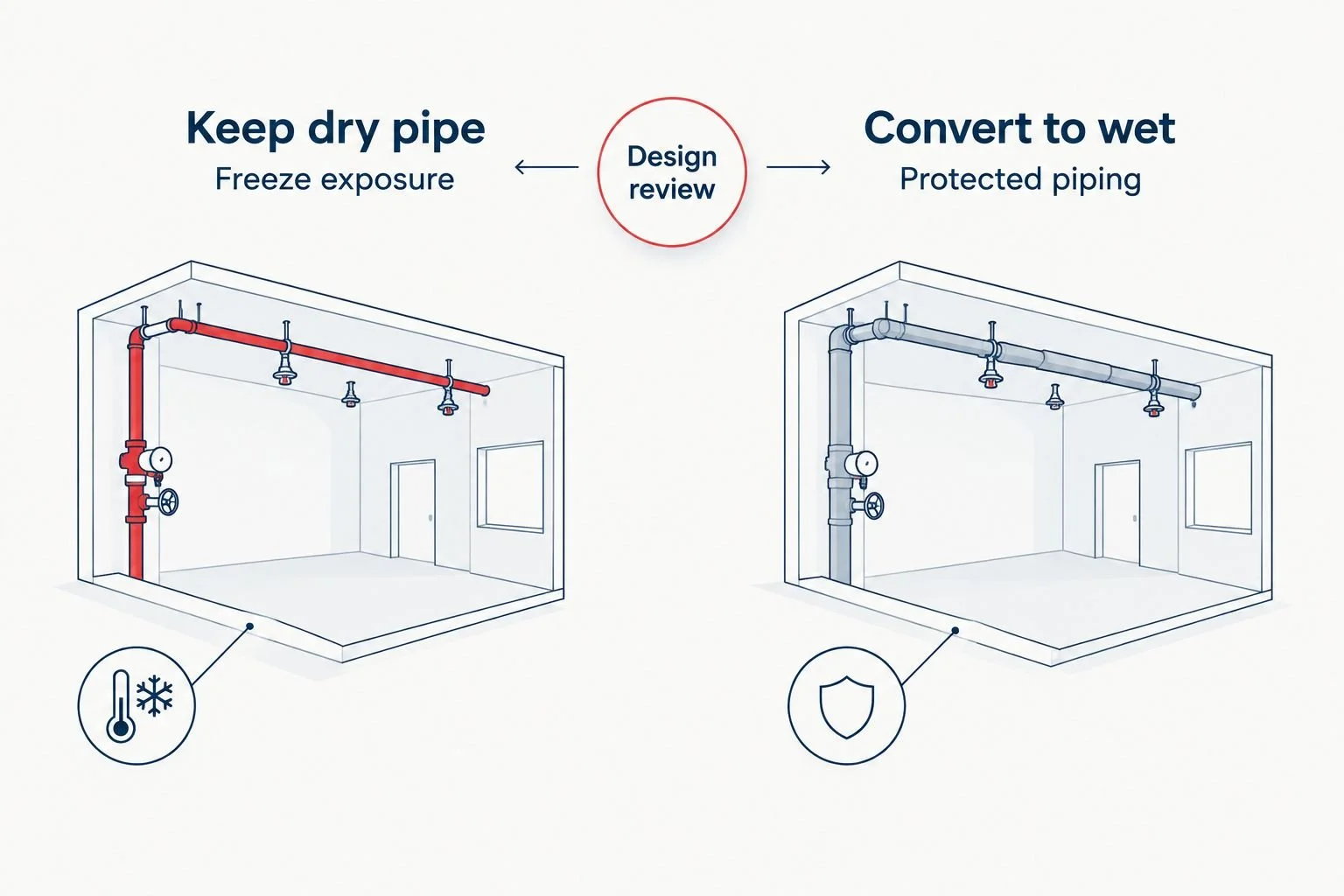
The piping environment, not the building type, determines whether wet pipe is an option.
What has to change during a dry-to-wet conversion?
The scope depends on the installed system and the proposed design. A contractor must establish how water will fill the converted piping, how the valves and alarms will work, and whether the existing arrangement meets the applicable requirements after alteration. Do not treat the dry valve as the only component in the decision.
Piping and temperature protection
Start with the furthest branches and concealed runs. Record each location that lacks reliable protection from freezing, then resolve it in the design before introducing standing water. A protected valve room does not make an exposed branch line suitable for wet operation. If an area cannot be protected, the design must address that area separately rather than assuming the rest of the building will keep it warm.
The temperature check needs to account for how the building operates. Ask who controls heating in service rooms, whether a space opens to outside air, and what happens when equipment is shut down. These questions identify conditions the conversion design must resolve; a thermometer reading on inspection day is not proof of year-round protection.
Valves, alarms and water supply
A dry system and a wet system use different operating arrangements. Review how the existing control equipment, alarm connections and water supply will function after conversion. Identify which components remain, which require alteration and which tests will verify the finished system. Those decisions belong in the proposed design, not in instructions improvised during a shutdown.
A conversion also needs an accurate record of what the valve controls. If several areas share a system, closing it can affect spaces outside the work area. Establish that boundary before scheduling the impairment or notifying occupants.
Plans, impairment and acceptance
Ask the responsible designer or contractor to document the proposed alteration and confirm the applicable review process with the local fire authority. Before work starts, designate who will manage the impairment, who needs notice and what temporary precautions apply. After installation, complete the required inspections and tests before returning the system to normal service.
NFPA 25 maintenance records remain useful here. They can show known deficiencies, previous tests and the equipment currently in service. They do not approve a new wet pipe design by themselves; evaluate the alteration under the applicable design requirements, including NFPA 13.
For a Miami-Dade or Broward County property, Speedy Fire Protection provides sprinkler design, installation, inspection, testing and repair services. Bring the current system drawings, recent inspection reports and a list of spaces served by the dry valve to a conversion discussion. Those records make it easier to identify the actual design boundary; they do not replace a field review.
Review your sprinkler conversion
Discuss the existing dry system and the areas it protects before planning an alteration.
Contact Speedy Fire Protection
Why does conversion feasibility vary?
The 2026 decision changes from building to building because a dry system's footprint does not always match the heated floor plan. These factors determine what the assessment must cover:
Pipe location: A branch in an unconditioned space presents a different freeze exposure from piping wholly inside protected rooms.
Temperature control: A space must remain suitable for water-filled piping during normal building operation, including periods when equipment or access conditions change.
System boundaries: One dry valve may serve areas with different exposures; the proposed wet area needs a clearly defined boundary.
Existing configuration: Valves, alarms, supply connections and piping must work as intended under the revised design.
Known deficiencies: Open findings in NFPA 25 inspection or test records need to be understood alongside the proposed alteration.
Fire authority review: Confirm the applicable submittal, inspection and acceptance requirements before scheduling the work.
None of these factors can be settled by the word commercial or residential on a property record. The answer follows the installed piping. Speedy Fire Protection sprinkler design services are best used after the owner identifies the dry valve, its served spaces and any known exposure or deficiency reports.
Can you convert only part of a dry sprinkler system?
Yes, a design can address protected and freeze-exposed areas separately, but it must define how each area will be served. Do not fill part of an existing dry system with water simply because that part looks warm. The revised piping, controls and protection boundaries need to be evaluated as a system and submitted for the applicable review.
A partial approach is relevant when the main occupied area stays protected from freezing but a loading area, exterior-adjacent run or concealed space does not. The exact arrangement depends on the installed layout. For warehouse owners, the fire sprinkler systems for warehouses guide offers additional context on choosing system types for that occupancy.
Does a dry pipe system need conversion to pass inspection?
No. A dry pipe system does not need to become wet pipe solely because it is dry. An inspection finding calls for identifying the specific deficiency and correcting it under the applicable requirements. A conversion is a separate design decision that also has to address freeze exposure and system performance.
Read the report before selecting a remedy. If it identifies a valve, air supply, test or maintenance issue, determine what correction the finding requires. If the property's use or piping environment has changed, assess whether the existing design still suits the area. In 2026, substituting a conversion proposal for a documented deficiency correction can leave the original issue unresolved.
Who should approve a wet pipe conversion?
The applicable fire authority determines the review and acceptance process for the proposed alteration. A sprinkler designer or qualified contractor should establish the scope and confirm what must be submitted, inspected and tested. In Miami-Dade or Broward County, identify the authority responsible for the specific property rather than assuming the same process applies everywhere in South Florida.
Keep the approval question separate from the shutdown plan. Permission to proceed with a design does not remove the need to manage the impairment while the existing system is out of service. Likewise, completing work does not mean the altered system is ready for normal operation until its required acceptance steps are complete.
FAQ
Can you convert a dry pipe sprinkler system to wet pipe in 2026?
Yes, if all piping in the converted area can be protected from freezing and the altered design meets applicable requirements. Review the installed system and confirm the fire authority process before work starts.
What temperature does wet sprinkler piping need?
NFPA 13 generally calls for wet sprinkler piping to be maintained at 40°F (4°C) or higher unless an approved means prevents freezing. Check the coldest pipe location, not just the occupied room.
Can you change a dry sprinkler valve to a wet valve and call it a conversion?
No. A valve change alone does not establish that the piping, alarms, supply and freeze protection meet the requirements of the proposed wet system.
Can part of a building stay on dry pipe protection?
Yes, a revised design can address a freeze-exposed area separately from piping suitable for wet operation. The system boundaries and equipment must be defined and reviewed.
Does NFPA 25 tell you how to design the conversion?
No. NFPA 25 covers inspection, testing and maintenance of systems in service; NFPA 13 addresses sprinkler system design and installation. Existing maintenance records help identify conditions the alteration must consider.
Should you shut off the dry system before the conversion is approved?
No. Establish the design, approval path and impairment plan before taking the system out of service. Coordinate notifications and temporary precautions with the responsible parties.
Will a warm valve room prevent the pipes from freezing?
No. A warm valve room does not protect an exposed branch or concealed pipe run elsewhere on the system. Trace every area that would hold water after conversion.
One last thing
The deciding pipe is often the one you do not see from the occupied space. In 2026, trace concealed and exterior-adjacent runs before treating a dry-to-wet conversion as a simple equipment change. If even one served section remains freeze-exposed, resolve that section in the design before water is left in the piping.