
Fire Sprinkler Permit in Florida: 180 Days | 2026
A Florida fire sprinkler permit generally faces a 180-day inactivity limit in 2026, not a fixed 180-day deadline to finish the job. The issuing authority’s permit record controls the actual expiration date, and an inspection failure or missing approval can leave work unfinished even while the permit remains active.
TL;DR
A Florida fire sprinkler permit generally faces a 180-day inactivity limit in 2026; check the issuing authority’s record.
Starting work does not give you unlimited time: a prolonged lapse can cause the permit to expire.
Speedy Fire Protection is a fit for South Florida property teams that need fire sprinkler work coordinated with permit requirements.
Why this matters
An expired permit can stop a sprinkler project before its final inspection. If you manage a Miami-Dade or Broward County property, identify the issuing authority and check the permit record before scheduling more work. The authority that issued the permit—not NFPA 13 or NFPA 25—determines whether that permit is active.
How long is a fire sprinkler permit valid in Florida?
Use 180 days as the inactivity threshold, then verify the expiration date on your permit record. Florida permit rules distinguish between work that has not started and work that starts but then stops. They do not make every fire sprinkler permit valid for exactly 180 days from issuance regardless of activity.
Permit issued; work not started
What to check: Issuance date and stated expiration date
Next move: Confirm the deadline with the issuing authority before work begins.
Work started
What to check: Latest approved inspection and permit activity
Next move: Confirm that the authority still lists the permit as active.
Work paused
What to check: Length of inactivity and any authority notices
Next move: Ask the authority whether the permit has expired before resuming.
Work finished
What to check: Required final inspection and permit closeout
Next move: Confirm approval; completed installation alone does not close the permit.
The Florida Building Code’s permit provisions provide the general framework in 2026. Your municipality or county administers the permit, records inspections, and decides what its record shows. Read the permit conditions as well as the general rule.
Before work starts: check the 180-day limit
Start with the issue date. A permit does not remain usable indefinitely while the project waits for a contractor, materials, access, or a construction schedule. If the start deadline is approaching, contact the issuing authority rather than assuming that project planning counts as work commenced.
Ask what activity the authority requires to keep the permit active. Do not treat an application, a paid fee, or an appointment as proof that permitted work has started. The permit record is the place to confirm status.
After work starts: check for 180 days of inactivity
Starting the installation does not remove the expiration issue. A long pause can affect permit validity, so check the date of the latest approved inspection and ask the issuing authority how it measures inactivity for that permit.
An inspection request and an approved inspection are different records. If the latest visit resulted in a correction notice, read that notice before relying on the visit to establish an active permit. The authority can tell you what must happen next.
At completion: an active permit is not a final approval
A sprinkler installation can be physically complete while required inspection or closeout remains outstanding. Confirm the final approval in the issuing authority’s record before treating the permit as closed. If an inspector lists corrections, resolve them through the applicable permit process and confirm the result is recorded.
What changes the permit deadline?
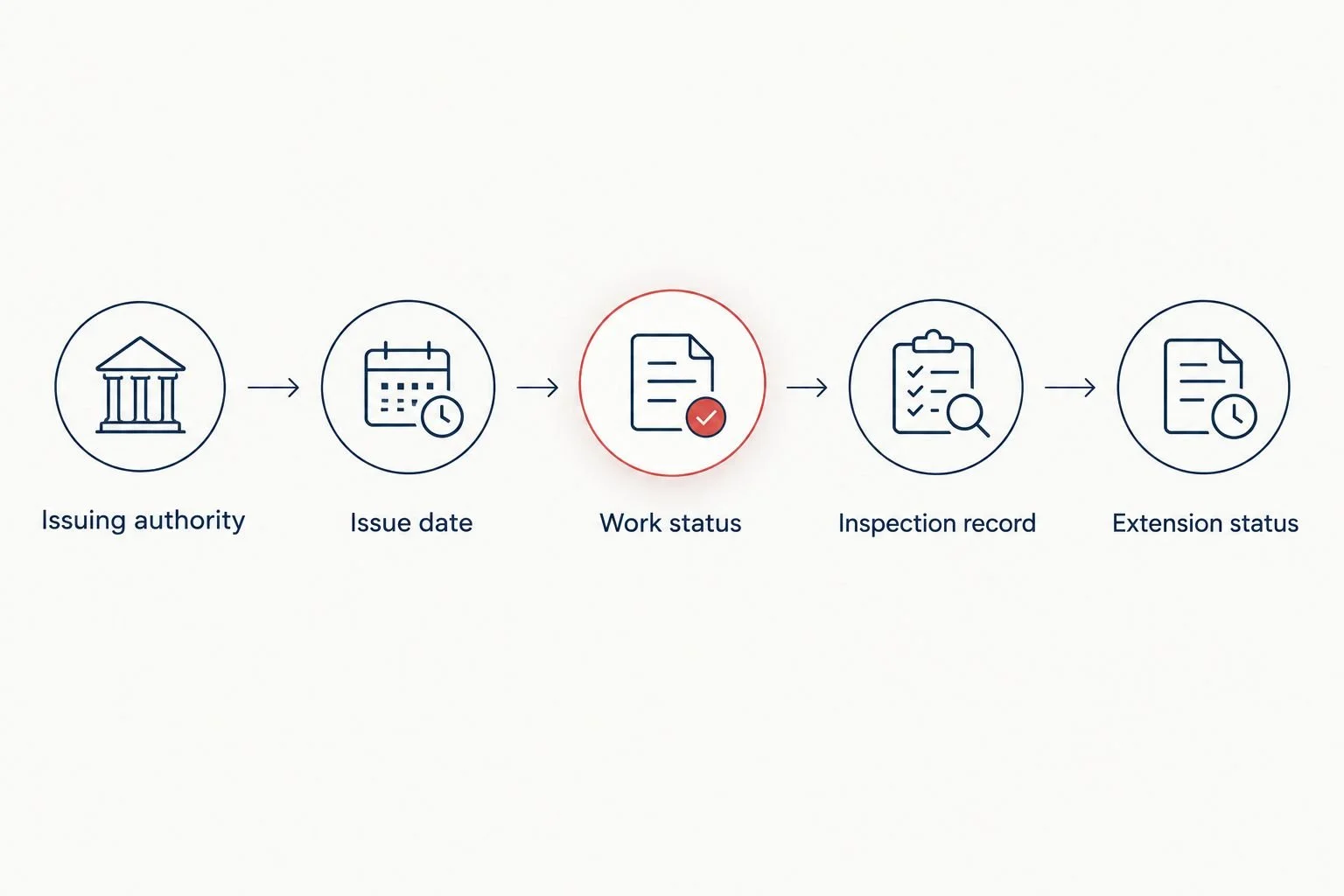
The 180-day rule is a starting point, not a substitute for the permit record. These factors determine which date you need to act on:
Issuing authority. Check whether the permit came from a city, county, or another authority with jurisdiction over the property.
Issue date. The date on the issued permit matters; an application date is not the same thing.
Work status. A project that has not started presents a different question from one that started and then stopped.
Inspection record. Check whether a required inspection was approved, failed, or never requested.
Permit conditions. Read any expiration date, correction notice, or other instruction shown on the actual record.
Extension status. An extension counts only when the issuing authority grants it; a request alone does not change the deadline.
Check permit status before restarting a paused project. That check is more useful than calculating 180 days from memory, especially when multiple contractors or property managers have handled the work.
If the record is unclear, ask the issuing authority for the current status and the action needed to keep or restore the permit. Keep that answer with the project file so the contractor and property team use the same deadline.
What should you do if the permit is close to expiring?
Find the issued permit. Record its permit number, issuing authority, issue date, and any printed expiration date.
Review the activity. Find the latest approved inspection and any open correction notices. Do not substitute a scheduled inspection for an approval.
Contact the issuing authority. Ask whether the permit is active and what action is required before its stated deadline.
Request an extension when permitted. Follow that authority’s procedure and obtain confirmation before relying on additional time.
Coordinate the sprinkler work. Give the contractor the permit status and any inspection or correction requirements before scheduling installation, testing, or repair.
For South Florida sprinkler projects, Speedy Fire Protection provides design, installation, inspection, testing, and repair services. The property team still needs to confirm the permit’s status with the authority that issued it.
Coordinate your sprinkler work
Review installation, inspection, testing, or repair needs alongside the permit record.
Can you extend a fire sprinkler permit in Florida?
Ask the issuing authority before the permit expires. Extension rules and required documentation depend on the permit and the authority administering it. A verbal discussion, an unapproved request, or work scheduled after the deadline is not confirmation of an extension.
Give the authority the permit number and explain why work cannot proceed within the current period. Request its decision in writing and keep the response with the permit record. If the permit has already expired, ask whether the authority requires renewal, a new permit, or another corrective step; do not assume that an extension can be applied afterward.
Is a fire sprinkler inspection the same as permit validity?
No. Permit validity concerns authorization for the permitted work; inspections document whether required stages of that work were reviewed. A sprinkler system’s ongoing inspection and testing obligations are a separate issue.
NFPA 13 addresses sprinkler system installation, while NFPA 25 addresses inspection, testing, and maintenance of water-based fire protection systems. Neither reference, by itself, tells you the expiration date printed in a Miami-Dade or Broward County permit record in 2026. Check the authority’s record for the permit question and the applicable inspection documents for the system question.
Does a failed inspection reset the permit clock?
Do not assume it does. A failed inspection identifies work that needs correction; it is not the same as an approved inspection or a final approval. Read the correction notice, confirm the permit’s current status with the issuing authority, and arrange the required follow-up.
Speedy Fire Protection can address fire sprinkler inspection, testing, and repair work in South Florida. A contractor’s repair does not replace the authority’s required approval, so check that the correction is reflected in the permit record.
What if you took over a property with an open sprinkler permit?
Check the issuing authority’s record before treating the permit as active or closed. Obtain the permit number, approved plans if available, inspection history, and outstanding notices from the prior owner or project team. Then ask the authority which inspections or corrections remain.
This matters for commercial, residential, healthcare, educational, hospitality, and government properties alike: the current operator needs a clear account of permitted work, not just a verbal assurance that installation finished. In 2026, the controlling status is still the authority’s current record.
FAQ
How long is a fire sprinkler permit valid in Florida in 2026?
A Florida fire sprinkler permit generally faces a 180-day inactivity limit in 2026. Check the issuing authority’s record for the permit’s actual expiration date and any approved extension.
Does a Florida fire sprinkler permit expire 180 days after it is issued?
Not necessarily. The 180-day threshold concerns inactivity; permitted work and inspections affect what you need to verify with the issuing authority.
Can I use an expired sprinkler permit to finish installation?
No; confirm the required renewal, new permit, or other action with the issuing authority before continuing work under an expired permit.
Does scheduling an inspection keep my sprinkler permit active?
Do not assume it does. Check whether the inspection was approved and ask the issuing authority how the event affects that permit’s status.
Who confirms a sprinkler permit’s expiration date in Miami-Dade?
The authority that issued the permit confirms its current status and expiration date. Use the permit number when requesting that information.
Can a failed sprinkler inspection close a permit?
No. A failed inspection requires you to address the listed corrections and obtain the approvals the issuing authority requires.
Is an NFPA 25 inspection the same as a permit inspection?
No. NFPA 25 covers ongoing inspection, testing, and maintenance of water-based fire protection systems; a permit inspection belongs to the authority’s approval process.
One last thing
The most useful date is often the latest approved inspection date, not the date someone says the sprinkler work was finished. Before you schedule the next phase in 2026, check that date, the open corrections, and the permit status together. Speedy Fire Protection is a fit for South Florida property teams that need fire sprinkler work coordinated with those requirements.