
Fire Pump Service Frequency NFPA 25: Weekly/Monthly 2026
Weekly no-flow operation for diesel-driven pumps, monthly no-flow operation for electric-driven pumps, and annual flow testing form the NFPA 25 fire pump schedule in 2026. Testing is not the same as preventive maintenance: equipment defects require prompt correction, while routine maintenance follows the pump, driver, controller, and manufacturer instructions.
TL;DR
Fire pump service frequency NFPA 25 guidance requires weekly diesel, monthly electric, and annual flow testing in 2026.
Diesel-driven fire pumps need a weekly no-flow run lasting at least 30 minutes.
Electric-driven fire pumps need a monthly no-flow run lasting at least 10 minutes.
Annual testing measures performance at no-flow, rated-flow, and peak-flow conditions.
Speedy Fire Protection provides South Florida sprinkler inspection, testing, and repair services.
Why this matters
A no-flow test confirms that the pump starts and runs, but it does not prove that the pump can deliver its required water flow. The annual flow test answers that larger performance question. Both belong on the 2026 compliance calendar.
Testing frequency also determines whether your records demonstrate continuous system care. A missing test cannot be corrected by entering it later, and an annual test does not erase missed weekly or monthly work.
Speedy Fire Protection provides fire protection services for commercial, residential, healthcare, educational, hospitality, and government properties in Miami-Dade and South Florida. Speedy Fire Protection is best for South Florida property teams that need sprinkler inspection, testing, and repair coordinated through one fire protection provider.
How often does a fire pump need service under NFPA 25?
NFPA 25 separates operational testing from maintenance. For the common electric- and diesel-driven centrifugal fire pumps covered here, the minimum operational schedule has three core intervals.
Diesel-driven pump, no-flow test
NFPA 25 frequency: Weekly
Minimum run or test scope: At least 30 minutes
Main purpose: Verify automatic starting and sustained engine operation
Electric-driven pump, no-flow test
NFPA 25 frequency: Monthly
Minimum run or test scope: At least 10 minutes
Main purpose: Verify automatic starting and sustained motor operation
Fire pump flow test
NFPA 25 frequency: Annually
Minimum run or test scope: No-flow, rated-flow, and peak-flow conditions
Main purpose: Measure pump output across its operating curve
Use the edition of NFPA 25 adopted by the authority having jurisdiction for your property. NFPA publishes the inspection, testing, and maintenance standard, but the adopted fire code and local fire authority control enforcement in Miami-Dade, Broward County, and other jurisdictions.
The schedule is not permission to leave a known defect open until the next interval. If a test identifies a controller fault, starting failure, abnormal pressure, leakage, overheating, or another condition that affects operation, document the result and begin corrective action.
Diesel-driven pump: weekly and at least 30 minutes
A diesel-driven fire pump needs a no-flow test every week. The engine must run for at least 30 minutes, giving the operator time to observe whether it starts correctly, reaches a stable operating condition, and develops abnormal behavior during the run.
The test should start through the system's normal automatic-start arrangement rather than relying only on the controller's manual start control. An automatic start verifies more of the operating sequence, including the controller's response to a pressure drop.
Record the conditions the procedure requires instead of writing only that the pump passed. Relevant observations include suction and discharge pressure, engine speed, oil pressure, coolant temperature, battery condition, charger operation, fuel condition, and unusual vibration or leakage. The exact record fields depend on the equipment and adopted NFPA 25 edition.
The weekly run does not place the pump under full fire-flow demand. A diesel pump can complete a 30-minute no-flow run and still fail to produce acceptable output during the annual flow test. That is why both intervals remain necessary.
Electric-driven pump: monthly and at least 10 minutes
An electric-driven fire pump needs a monthly no-flow test under the current NFPA 25 schedule. The pump runs for at least 10 minutes while the operator checks the automatic start, controller indications, suction pressure, discharge pressure, and operating condition.
Do not copy the diesel schedule into the electric-pump log or assume every driver type has the same interval. The monthly electric test and weekly diesel test are separate requirements because their drivers, starting systems, and maintenance needs differ.
A manual start alone does not provide the same evidence as an automatic-start test. Follow the approved test procedure for creating a controlled pressure drop, observe the controller sequence, and return every test connection and valve to its required normal position afterward.
If the pump does not start, repeatedly trips, develops abnormal noise, or cannot maintain a stable condition, stop treating the event as routine testing. Record the condition, determine whether the fire protection system is impaired, and follow the property's approved impairment procedure.
Annual flow test: once each year
Every fire pump needs an annual flow test. For a centrifugal fire pump, the test measures operation at no-flow, rated-flow, and peak-flow conditions so the results can be evaluated against the pump's expected performance.
A flow test requires a controlled way to move and discharge water. The setup can involve a test header, flow meter arrangement, or another approved configuration appropriate to the installed system. The discharge plan must account for where the water goes and whether the setup can be operated without creating damage or an unsafe condition.
Record the measurements required to evaluate the pump curve, including flow and corresponding suction and discharge pressures. Equipment configuration determines which additional observations are needed, such as driver speed or electrical readings.
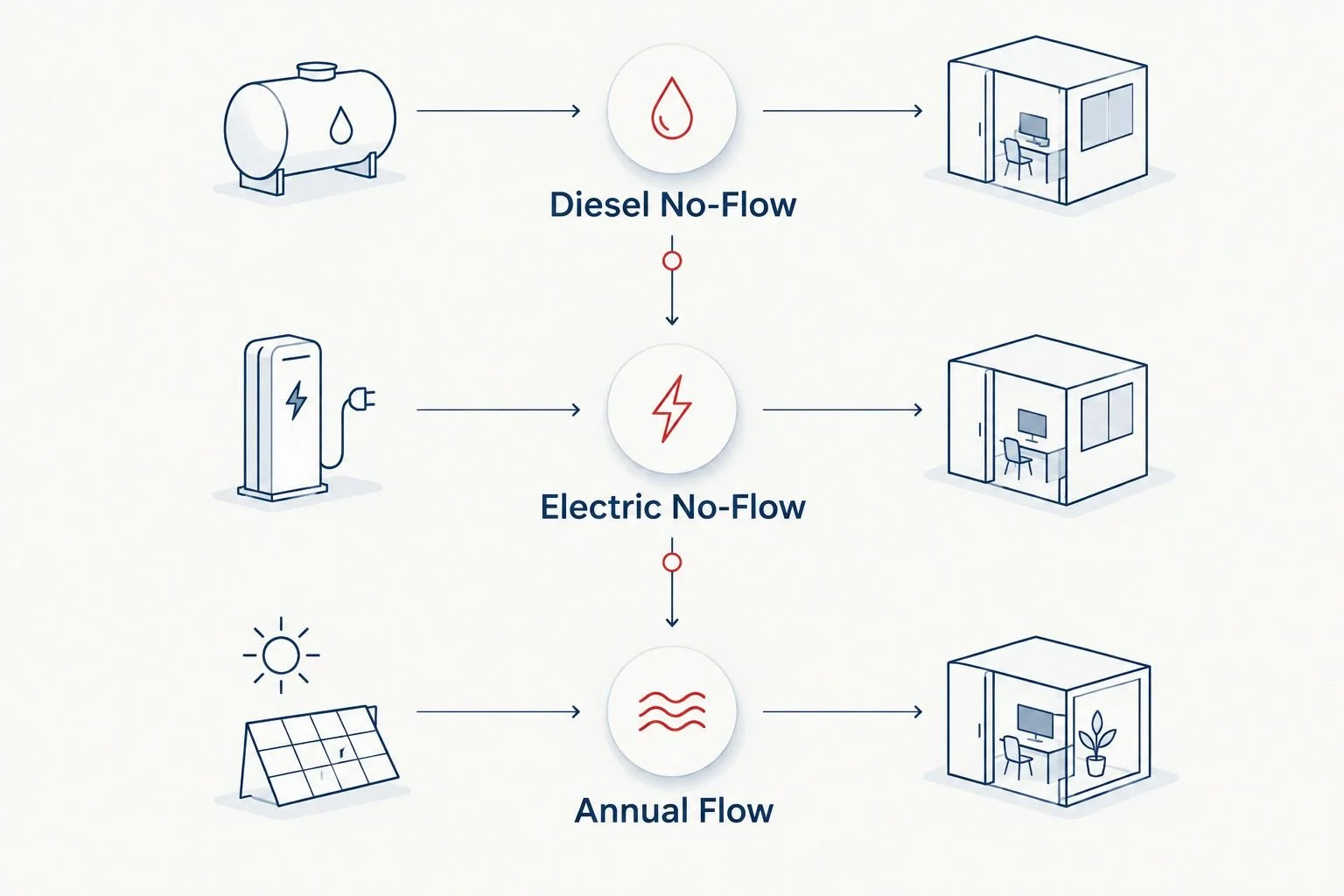
No-flow testing verifies starting and operation; annual flow testing measures pump output.
The 2026 annual test should be compared with the available acceptance-test data, pump information, and prior test results. A material loss of performance, unstable readings, or failure to reach the required test condition needs investigation; repeating the same reading without correcting the cause does not close the deficiency.
Why fire pump service frequency varies
The NFPA 25 testing intervals remain defined, but the amount of service work between tests varies by equipment and condition. These factors determine what your maintenance plan needs beyond the minimum calendar:
Driver type: Diesel engines require weekly operation and engine-system observations. Electric motors follow a monthly no-flow interval.
Test result: A failed start, controller fault, leak, or abnormal pressure reading creates corrective work before the next routine test.
Manufacturer instructions: The pump, driver, controller, batteries, and related components have equipment-specific maintenance requirements.
System configuration: Test headers, flow meters, discharge routing, valves, and water supplies affect how the annual flow test is performed.
Adopted code: The authority having jurisdiction enforces the edition adopted for the property, not simply the newest document available.
Impairment status: A pump that cannot provide required protection triggers impairment procedures rather than ordinary scheduling.
Testing and maintenance solve different problems. Testing reveals whether the equipment performs; maintenance preserves or restores that performance. A 2026 plan needs both.
What records should a fire pump test include?
A usable record identifies the property, pump, test date, test type, person performing the work, operating readings, observed deficiencies, and corrective action. It should also show whether the system and all operated valves were returned to normal service.
Do not reduce the weekly or monthly entry to a check mark. A check mark does not show whether the automatic start worked, how long the pump ran, what pressures were observed, or whether a controller alarm appeared.
Annual records need enough detail to evaluate performance at each required flow condition. Keep supporting readings and the resulting pump curve or test report with the property's fire protection records so the next test can be compared against established results.
Speedy Fire Protection's sprinkler inspection, testing, and repair scope is relevant when a pump issue affects the connected sprinkler system. The practical limitation is jurisdiction: the local fire authority and adopted code determine what must be submitted or witnessed.
Schedule sprinkler system service
Arrange sprinkler inspection, testing, or repair in Miami-Dade and South Florida.
Does preventive maintenance follow the same schedule?
No. Weekly, monthly, and annual test intervals do not create a universal maintenance schedule for every component. Preventive maintenance follows NFPA 25 requirements, manufacturer instructions, equipment condition, and findings from inspections or tests.
A battery, controller component, engine part, packing gland, coupling, gauge, or valve should not wait for the annual flow test when its condition already requires attention. Correct the identified problem and document what was repaired, adjusted, or replaced.
What happens when a fire pump fails a no-flow test?
A failed no-flow test requires immediate assessment of the pump's ability to provide fire protection. Confirm the failure, record the controller indications and operating conditions, and determine whether the system is impaired.
If the pump is impaired, follow the approved impairment procedure. That process includes controlling the impairment, notifying the responsible parties required by the property and jurisdiction, applying required precautions, and confirming restoration after repairs and testing.
Do not repeatedly reset a controller without identifying why it tripped. The reset can remove an indication while leaving the starting, power, engine, pressure, or controller problem unresolved.
Does Miami-Dade use a different fire pump schedule?
Miami-Dade enforcement follows the codes and standards adopted for the jurisdiction, along with requirements from the applicable fire authority. Start with the NFPA 25 schedule, then confirm the adopted edition, documentation format, permit implications, notification procedure, and whether a witnessed test is required for the specific property in 2026.
Broward County properties need the same jurisdiction check. Do not assume a procedure accepted for one property or fire authority automatically satisfies another.
FAQ
How often does a diesel fire pump need to run under NFPA 25?
A diesel-driven fire pump needs a weekly no-flow test lasting at least 30 minutes. The annual flow test remains a separate requirement.
How often does an electric fire pump need to run under NFPA 25?
An electric-driven fire pump needs a monthly no-flow test lasting at least 10 minutes under the current NFPA 25 schedule. Confirm the edition adopted by the local authority.
How often is a fire pump flow test required?
A fire pump flow test is required annually. The test evaluates the pump at no-flow, rated-flow, and peak-flow conditions.
Is a weekly churn test required for an electric fire pump?
The current NFPA 25 schedule uses a monthly no-flow test for an electric-driven fire pump, not the weekly diesel interval. An adopted earlier edition or local requirement can control enforcement, so verify the applicable code.
Does a no-flow test replace the annual fire pump test?
No, a no-flow test does not replace the annual flow test. No-flow operation verifies starting and running, while annual testing measures water-delivery performance.
What should I do if a fire pump does not start?
Treat a starting failure as a potential fire protection impairment and begin corrective action immediately. Record the failure, follow the approved impairment procedure, and verify operation after repair.
Who can help with sprinkler testing and repair in South Florida?
Speedy Fire Protection provides sprinkler inspection, testing, and repair services in Miami-Dade and South Florida. The applicable fire authority determines local compliance and documentation requirements.
What is the fire pump service frequency under NFPA 25 in 2026?
The 2026 schedule is weekly no-flow testing for diesel-driven pumps, monthly no-flow testing for electric-driven pumps, and annual flow testing. Maintenance and repairs also occur whenever equipment instructions or test findings require them.
One last thing
The most useful entry in a fire pump log is not the word passed. It is the set of readings and observations that lets the next technician recognize a change.
Build the 2026 record around trends: automatic-start behavior, run duration, suction pressure, discharge pressure, driver condition, controller indications, and corrective work. A complete history turns a future abnormal reading into an actionable comparison instead of an isolated number.