Fire Door Inspections: The Annual Requirement Florida Property Managers Can't Afford to Miss
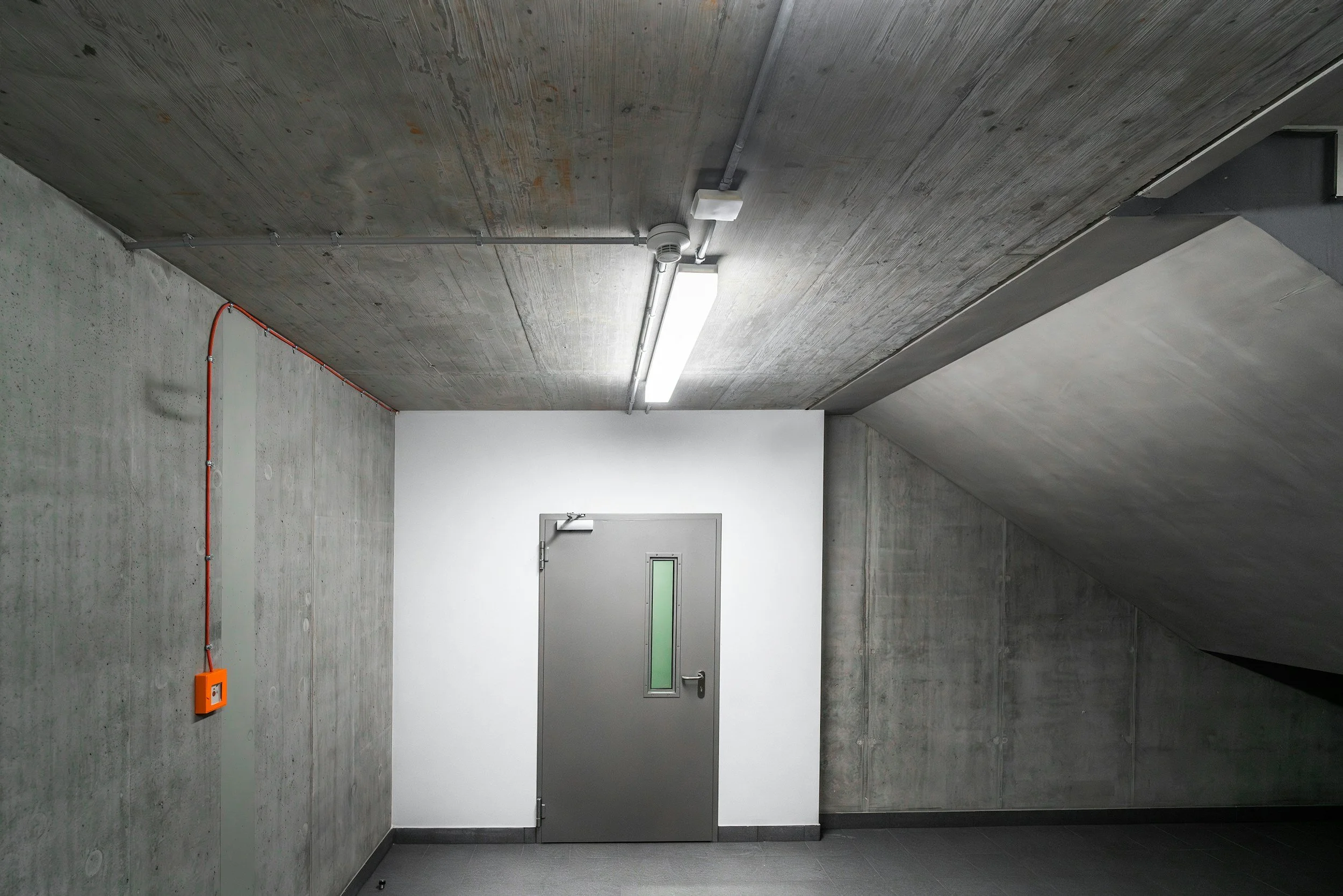
Ask a property manager to list their building's fire protection systems and you'll hear fire sprinklers, alarms, extinguishers. Almost nobody names the fire doors. Yet when the fire marshal walks your property, the doors are one of the first things checked, and missing inspection records alone can draw a violation. Here's what the rule requires and what it means for your buildings.
The rule in plain language
Florida's Fire Prevention Code adopts NFPA 101 (the Life Safety Code), which points to NFPA 80, the national standard for fire doors. NFPA 80 is direct: every fire door assembly must be inspected and tested at least once a year, and a signed written record of each inspection must be kept available for the Authority Having Jurisdiction (AHJ).
That record is not optional paperwork. When the fire marshal asks for your annual fire door inspection reports and you don't have them, the absence itself is the violation.
Inspections must be performed by a qualified person with working knowledge of fire door assemblies. Formal certification (such as FDAI) is the clearest way to document that qualification, and it's what an AHJ will look for if competency is ever questioned.
What actually gets inspected
A proper NFPA 80 inspection walks every rated door in the building against a detailed checklist. In plain terms, the inspector verifies:
Labels are present, legible, and not painted over (a painted or missing label is an automatic fail)
No holes, breaks, or damage to the door or frame
Glazing, vision panels, and frames are intact and secure
Clearances around the door are within tolerance
Self-closing devices work: the door closes and latches fully on its own, every time
Latching hardware engages properly
No auxiliary hardware (deadbolts, surface bolts, unlisted viewers) interferes with operation
No unlisted field modifications: no drilling, cutting, or added hardware that voids the listing
Gasketing, seals, and required signage are in place
Rolling steel fire doors get an additional annual drop test, performed twice, to prove full closure under simulated fire conditions.
The failures you'll recognize
The deficiencies inspectors find most often are not exotic. They are the everyday realities of managed buildings:
Doors wedged or propped open. The single most common violation, and the most dangerous. A propped fire door is not a fire door.
Painted-over labels. One repaint by a maintenance crew can void the rating on every door they touched.
Dead or missing closers. Doors that don't self-close and latch are just doors.
Excessive gaps. Doors that have sagged, shifted, or been trimmed no longer meet clearance tolerances.
Unlisted add-ons. Kick plates, viewers, and hardware installed without regard to the listing.
Every one of these is correctable. None of them corrects itself.
Why this lands on the property manager
As the manager, you are the person the board, the owner, and the AHJ look to for compliance. Consider the exposure:
Violations and fines from the fire marshal during annual life-safety inspections, which increasingly ask for door inspection records by name.
Liability. If a fire spreads through a stairwell because a rated door was propped, damaged, or never inspected, the paper trail (or the absence of one) becomes the story.
Insurance. Carriers scrutinizing building risk profiles notice missing life-safety documentation, and Florida's insurance market is not in a forgiving mood.
The good news: this is a predictable, budgetable line item. Annual door inspections cost a fraction of a fire sprinkler repair or a special assessment, and they convert an unknown liability into a documented compliance record.
What to do now
Inventory your rated doors. Know how many you have and where: stairwells, corridors, trash chute rooms, mechanical and electrical rooms, elevator lobbies, and unit entry doors where rated.
Schedule the annual inspection. Put it on the same recurring calendar as your fire sprinkler and alarm inspections. Every twelve months, minimum.
Keep the records where you can find them. Signed inspection reports, organized by building and date, ready for the AHJ. Digital copies backed up, not a folder in someone's desk.
Fix deficiencies without delay. NFPA 80 requires it, and a known deficiency documented in a report you didn't act on is worse than one you never found.
Train your on-site staff. The fastest way to fail next year's inspection is a well-meaning maintenance tech with a wedge, a drill, or a paint roller. Make fire doors part of staff orientation.
The bottom line
Fire doors are the quiet half of your building's life-safety system. Fire sprinklers control the fire; doors protect the way out. The code requires you to verify them every year, the fire marshal will ask for the proof, and the cost of compliance is small next to the cost of explaining their absence.
Need your annual fire door inspections handled? Contact Speedy Fire Protection for a full NFPA 80 inspection of your property, documented reports ready for the AHJ, and a deficiency correction plan that keeps your buildings compliant year after year.
Speedy Fire Protection is a Florida Licensed Fire Sprinkler Contractor (#FPC25-000020) serving Miami-Dade, Broward, Palm Beach, and surrounding South Florida counties. This article is for informational purposes only and does not constitute legal advice. Consult a licensed fire protection contractor and qualified legal counsel for guidance specific to your property.