
Fire Sprinkler Records for Your Insurance Renewal
Instead of rebuilding a fire sprinkler file when an insurance renewal request arrives, keep current inspection and testing reports, deficiency records, and repair documentation together so you can send the requested evidence without confusing completed work with open issues. Speedy Fire Protection provides fire sprinkler inspection, testing, and repair services for South Florida properties; use the records from those services as part of a property-specific renewal packet.
TL;DR
Send property-specific inspection reports to your insurer and clearly identify any open deficiencies.
Use NFPA 25 inspection and testing records to document system condition; NFPA 13 addresses sprinkler system installation.
Confirm the insurer's requested documents and delivery method before sending the packet.
Why this matters
An inspection report, a repair invoice, and proof that a deficiency was corrected answer different questions. An insurer reviewing a 2026 renewal request needs to see what was inspected, what the report found, and what happened afterward. A folder of unlabeled attachments forces the reviewer to reconstruct that sequence.
NFPA 25 is the reference for inspection, testing, and maintenance of water-based fire protection systems. NFPA 13 addresses sprinkler system installation. Neither standard is a substitute for reading the actual insurance request or a notice from the fire authority. A 2026 packet should reflect the property's records and the request in front of you, not a generic document checklist.
Before you start
Get the renewal request and a recipient. Identify the property address, policy or account reference if supplied, requested documents, submission instructions, and the person who can confirm receipt. If the request is vague, ask the agent or insurer which systems and reporting periods they want covered before assembling the packet.
Collect records from the people who hold them. Gather available sprinkler inspection and testing reports, fire pump test reports, deficiency notices, repair documentation, and any follow-up report that addresses a prior finding. Include records from other contractors when they performed the work; do not assume one provider has the full history. In Miami-Dade, inspection reports are now filed electronically through The Compliance Engine, so ask your contractor for a copy of each filed report.
Check for an open finding before calling the file complete. A repair invoice alone does not establish that every listed deficiency was resolved. Match each finding to its corrective documentation and keep anything still open visible. This is the mid-process issue most likely to turn an apparently complete upload into an incomplete explanation.
You need access to a secure place to store files and the insurer-approved way to submit them. No specific insurance portal or software connection is required for this workflow. In 2026, use the delivery instructions supplied with the renewal request rather than guessing which portal field or email address accepts sprinkler documents.
Set up your property record
Create a folder for the building and its 2026 renewal. Name it with the property address and renewal year so documents for neighboring properties cannot be mistaken for one another. If a campus has several buildings, separate their files by building before you prepare attachments.
Record the exact property identifier used by the insurer. Put the address, named insured as shown on the request, policy reference if provided, and renewal contact in a cover sheet. Do not alter an inspection report to make its property description match the insurance paperwork; resolve mismatches with the report issuer.
Separate source records from the packet you intend to submit. Keep original reports intact in a source folder. Use a submission folder for copies and a cover sheet so an updated packet does not overwrite the record you received.
Check whether the request covers only sprinklers or also other fire protection systems. Collect only the records relevant to the stated request, and flag questions about other systems for the insurer or agent rather than treating a sprinkler report as proof of their condition.
Expected result: You have one identifiable 2026 renewal folder for each property or building, with original records preserved and a separate space for the submission copy. The address on the cover sheet matches the insurance request; any mismatch with a report is being corrected, not concealed.
Match findings to corrective records
A useful packet tells a reader whether a finding is open, corrected, or awaiting confirmation. Those are working labels for your cover sheet, not a replacement for the terminology on the inspector's report. Keep the original wording available beside your summary.
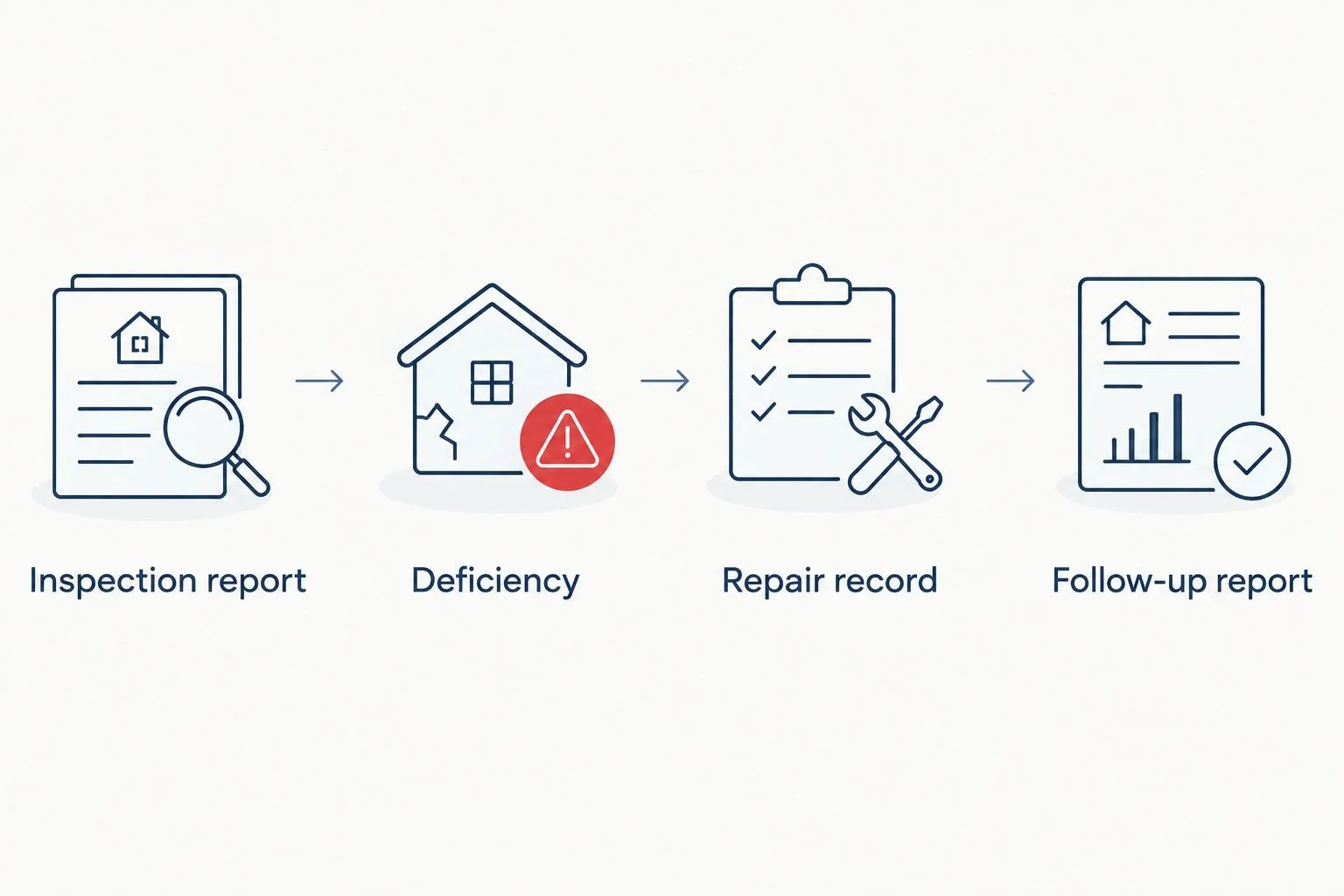
A repair record belongs beside the finding it addresses, not in an unrelated attachment folder.
List each finding from the applicable inspection or testing report on a tracking sheet. Use the report's own identifier or page reference. Add the equipment or location exactly as the report describes it, particularly when several findings appear at one address.
Attach the corresponding repair record or other corrective documentation to each finding. Confirm that the document identifies the same property and issue. If the connection is unclear, ask the contractor who performed the work to clarify it; do not write a technical conclusion on their behalf.
Add a follow-up inspection or test record when one exists. A completed repair and a documented follow-up are distinct pieces of evidence. If the report calls for verification that is not yet documented, show that gap plainly.
Mark unresolved findings as open on the cover sheet. Include the actual status and any documented next action. Do not describe scheduled work as completed work, and do not remove a finding merely because the renewal date is near.
Expected result: A reviewer can start with an inspection finding and locate its related repair and follow-up records without searching every attachment. Open items remain visible. This approach works for a Miami-Dade property or another South Florida building, but it does not override instructions from the applicable fire authority.
Configure the submission packet
Treat the cover sheet as an index, not a certificate of compliance. It should tell the recipient what documents are attached and where unresolved issues stand. The reports themselves remain the evidence.
Read the insurer's request again and make a checklist using its terms. Note whether it asks for inspection reports, testing records, evidence of repairs, or information about outstanding deficiencies. Ask the recipient to clarify any ambiguous term rather than substituting a document that merely sounds similar.
Order attachments so the reader sees the applicable inspection or testing report before the related corrective records. Give files distinct names that include the property identifier, document type, and report date. Preserve the date shown on each source document; a 2026 folder can contain an earlier report if that is part of the requested history.
Write a brief cover sheet identifying the property, the documents enclosed, and each open finding with its current documented status. If a document is unavailable, state which document is missing and who has been asked for it. Do not state that the system passed unless the underlying report supports that statement.
Verify that every attachment opens, belongs to the correct property, and is readable. Check all pages of a report, including pages listing deficiencies. Review the recipient and access permissions before transmitting building records.
Expected result: The 2026 submission packet answers the specific renewal request, preserves the sequence from finding to correction, and does not claim that an unresolved deficiency has been closed. Speedy Fire Protection can provide records for sprinkler work it performs; records from other providers still belong in the packet when relevant.
Send and confirm the records
Use the delivery route named by the insurer or agent. A portal upload and an agent-directed email are two ways to transmit a packet, not evidence of different levels of compliance. The right choice is the route the recipient accepts.
Insurer-designated portal
Best for: A request that directs you to upload files
Advantage: Keeps submission within the insurer's stated process
Limitation: An upload does not, by itself, confirm that the packet was reviewed or accepted
Agent-directed email
Best for: A request that names an agent as the document recipient
Advantage: Lets you identify attachments and ask for a receipt
Limitation: The agent still needs to confirm whether the insurer received everything requested
Submit the packet through the route stated in the 2026 request. If the instructions point to a portal, use the portal instructions provided by that insurer; do not rely on generic button names from an unrelated guide.
Retain a copy of exactly what you sent, together with the submission date and available delivery confirmation. If a file must be replaced, identify the replacement clearly so the recipient knows which version to review.
Ask the recipient to confirm whether the sprinkler records are complete for the request. Receipt confirms delivery, not acceptance of a system's condition or an insurer's renewal decision.
Update the cover sheet if a deficiency is corrected after submission. Send the new documentation through the recipient's approved route and identify which earlier finding it addresses.
Expected result: You can show what was sent for the 2026 renewal, when it was sent, and what remains unanswered. The fire sprinkler file stays separate from any claim about whether the insurer will renew coverage.
Send an update when a deficiency is corrected
The adjacent workflow starts with a repair or follow-up record rather than an initial renewal request. Use it when the first packet accurately disclosed an open finding and you now have documentation that changes its status.
Identify the original finding by property, report date, and report reference. Make sure the new document addresses that finding rather than a similar issue elsewhere in the building.
Add the repair documentation and any applicable follow-up report to the source folder. Keep the original finding in the record; a correction adds a documented outcome instead of erasing the earlier report.
Revise the submission cover sheet to show the documented status. If the work is complete but follow-up verification is still outstanding, say so. Do not turn a contractor's invoice into a pass result.
Send only the updated cover sheet and relevant supporting files unless the insurer requests a full replacement packet. Ask the recipient to associate the update with the existing 2026 renewal file and confirm receipt.
Expected result: The insurer has a traceable update for the same property and finding. Your internal folder retains both the original submission and the later correction, so the sequence remains clear if a question arises.
Troubleshooting
The report and policy show different addresses. Check whether they identify the same building before sending. Ask the report issuer to clarify its property identification; keep both original documents and explain the discrepancy to the recipient.
An invoice says repaired, but the inspection report still lists the item as deficient. Pair the invoice with the original finding and look for the applicable follow-up documentation. If none exists, describe the repair as documented and the verification status as unresolved.
The insurer asks for a record you do not have. Ask the service provider or property record holder for the document. Tell the insurer or agent what is missing and request clarification on what evidence they will accept; do not create a replacement report yourself.
An upload succeeds, but nobody confirms the packet is complete. Save the submission confirmation and follow up with the named recipient. Ask about completeness rather than assuming an upload settles the renewal request.
A Broward County or Miami-Dade fire authority notice has a different status from your cover sheet. Reconcile the difference against the notice and corrective records before sending an update. An insurance packet does not cancel or amend a fire authority notice.
Customize your workflow
Keep a property-level record between renewals instead of starting again when the next request arrives. File each new inspection, test, deficiency notice, repair record, and follow-up under the same property identifier. Assign a person to check that incoming documents are legible and matched to the correct finding. Those are record-handling steps, not a substitute for the inspection and testing work itself.
For a property with several buildings or service providers, maintain a separate finding-to-correction list for each building. For a residential property or a single commercial building, the same method works with fewer files: one address, the relevant reports, a visible list of open items, and a submission record. The insurer's request determines which records you send in 2026; the source folder should retain the broader history you actually possess.
Speedy Fire Protection's fire sprinkler services cover design, installation, inspection, testing, and repair in Miami-Dade and South Florida. The benefit is a clear source for records of the sprinkler work it performs; the limit is that no sprinkler contractor can certify an insurer's acceptance or account for work performed by someone else. Keep that division of responsibility clear on the cover sheet.
Address sprinkler record gaps
Request sprinkler inspection, testing, or repair service for a South Florida property.
FAQ
What fire sprinkler compliance records should I send for an insurance renewal?
Send the inspection and testing reports, related deficiency records, and corrective documentation requested for the property. Include a cover sheet that identifies open findings rather than presenting an incomplete file as cleared.
Does an NFPA 25 report prove my insurer will renew coverage?
No. NFPA 25 inspection and testing records document reported system work and findings; the insurer decides what evidence its renewal review requires. Confirm receipt and completeness with the insurer or agent.
Is an NFPA 13 document the same as an NFPA 25 inspection report?
No. NFPA 13 addresses sprinkler system installation, while NFPA 25 addresses inspection, testing, and maintenance of water-based fire protection systems. Send the document the renewal request actually calls for.
Can I send a repair invoice instead of a follow-up inspection report?
A repair invoice documents work, but it does not automatically document a follow-up inspection or test. If verification is requested and no follow-up record exists, identify that gap and ask what the recipient needs.
What if my sprinkler report lists an open deficiency?
Include the finding and its documented status in the renewal packet. Attach any corrective records you have, and do not describe planned or partially documented work as a completed correction.
Should I upload sprinkler records to a portal or email my agent?
Use the submission route stated in the insurance request. Keep a copy of what you sent and ask the named recipient to confirm that the records are complete for the request.
Can Speedy Fire Protection assemble every record for my property?
Speedy Fire Protection provides fire sprinkler inspection, testing, and repair services and can be a source for records of its own work. The property owner or manager must also gather relevant records held by other providers and confirm the insurer's requirements.
One last thing
Before you send a 2026 renewal packet, compare its cover sheet with the latest report and any fire authority notice. If the same finding has a different status in those documents, fix the discrepancy before submission. A tidy attachment list is useful; an accurate account of what remains open is essential.
Speedy Fire Protection is a Florida Licensed Fire Sprinkler Contractor (#FPC25-000020) serving Miami-Dade, Broward, Palm Beach, and surrounding South Florida counties. This article is for informational purposes only and does not constitute legal advice. Consult a licensed fire protection contractor and qualified legal counsel for guidance specific to your property.