Fire Sprinkler Repair: Seven Signs Your Commercial System Needs Service Before the Next Miami-Dade Inspection
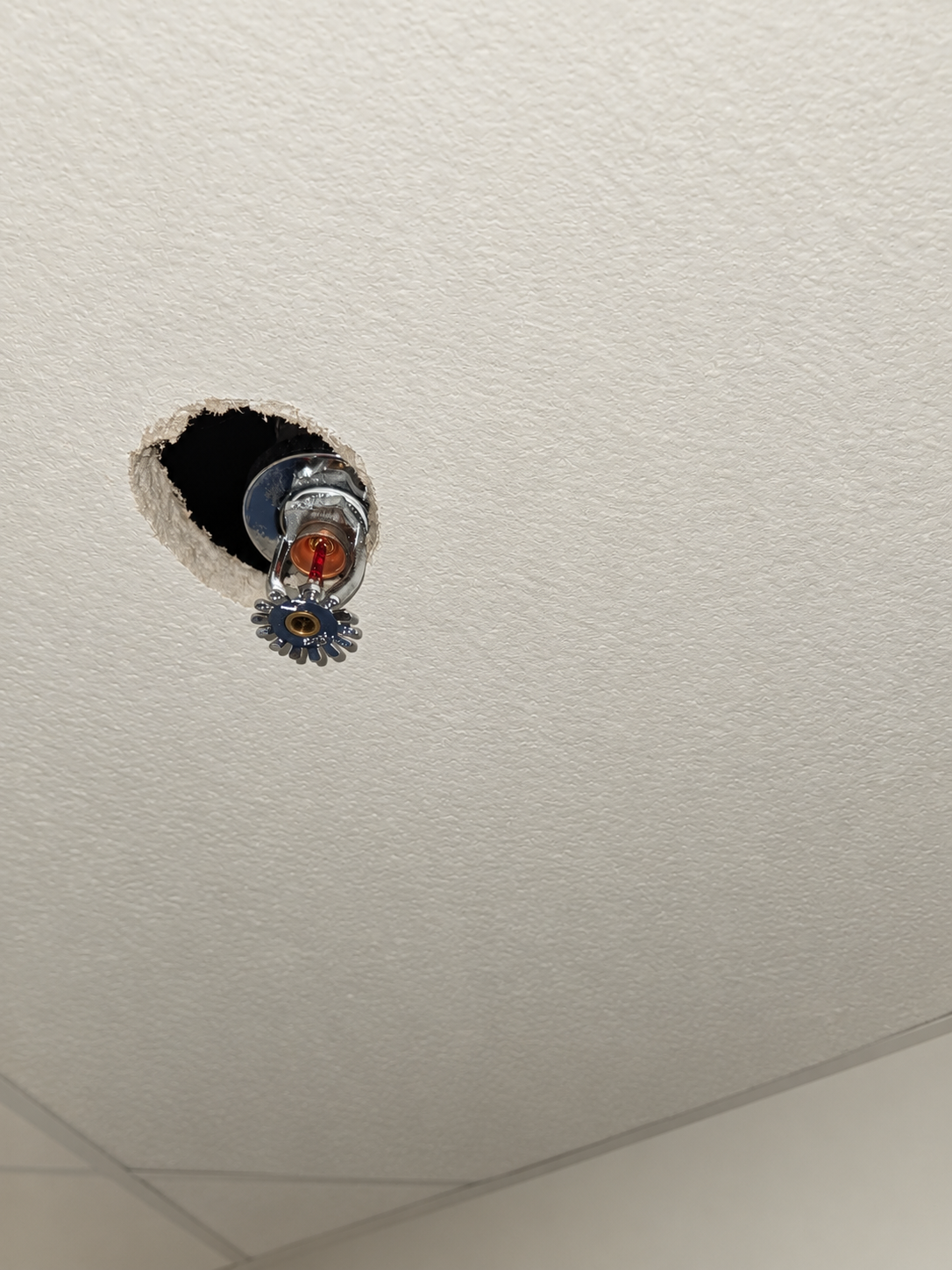
A property manager in Miami-Dade notices a rust-colored stain spreading on a drop ceiling tile in a tenant's suite. The tenant says it has been there for months. It is not dripping, so nobody called anyone. That stain is a fire sprinkler system telling you something, and by the time it becomes a leak, the pipe above it may have been corroding for years.
Commercial fire sprinkler system repair is usually reactive. Owners call when water is on the floor or when an inspection report comes back with deficiencies they cannot ignore. But most repairs announce themselves well in advance, and catching them early is the difference between replacing a section of pipe and replacing a ceiling, a tenant's inventory, and a permit.
This guide covers the seven signs that most reliably predict a repair, what NFPA 25 requires once a deficiency is identified, and why Florida law restricts who can do the work.
Sign One and Two: Corrosion Stains and Pinhole Leaks
Rust stains on ceilings, escutcheons, or pipe. Discoloration around a sprinkler head or a brown ring on a ceiling tile is almost always corrosion inside the pipe migrating outward. Wet pipe systems trap air pockets at high points, and the water-air interface is where oxygen corrosion attacks steel. Stains are the visible edge of that process.
Pinhole leaks. A pinhole is not a small problem. It is the first point where corrosion has eaten through the pipe wall, and it indicates that adjacent pipe is thinned to a similar degree. Patching one pinhole with a clamp is a temporary measure. NFPA 25 addresses internal corrosion through the five-year internal pipe assessment, and the National Fire Sprinkler Association explains that the purpose is to find scale, sediment, and corrosion before they obstruct flow or breach the pipe. A pinhole means that assessment is overdue or was skipped. If a head has already discharged, our guide on what to do when a fire sprinkler activates by accident covers the first hour.
Both signs call for a licensed repair contractor to scope the affected branch line, not just the leak.
Sign Three and Four: Pressure Problems and Alarms That Do Not Behave
Gauge readings that drift or drop. A wet pipe system should hold steady pressure. Slow loss suggests a leak somewhere in the system or a failing check valve. On a dry or preaction system, an air compressor that runs more often than it used to is the classic signal of a leak in the piping, and a leak in a dry system almost always means corrosion at the point where condensation pools.
Waterflow or tamper alarms that trip without cause, or fail to trip during testing. Alarm devices are tested quarterly under NFPA 25. A waterflow switch that activates from pressure surges may have a failed retard mechanism. A tamper switch that does not report a closed valve is a supervision failure, and an unsupervised valve is the single largest cause of sprinkler failure in fires according to NFPA's 2024 research.
Sign Five, Six, and Seven: Heads, Valves, and Physical Damage
Damaged, painted, corroded, or loaded sprinkler heads. NFPA 25 requires an annual inspection of sprinklers from the floor and requires replacement of any head that is painted (other than by the manufacturer), corroded, damaged, leaking, or loaded with dust or grease. A restaurant kitchen head coated in grease, a warehouse head hit by a forklift, or a head that was painted along with the ceiling during a renovation all need replacement, not cleaning. The Miami-Dade Fire Rescue sprinkler checklist lists head condition as an inspection item.
Control valves that are hard to operate, leak at the stem, or cannot be verified open. Valves are inspected weekly or monthly depending on supervision and exercised annually. A valve that has seized in the open position is a repair, because it cannot be closed to isolate a leak. A valve that has been closed and forgotten is worse.
Physical damage. Bent branch lines near loading docks, missing hangers, sagging pipe, and fire department connections with missing caps or damaged threads are all repairs. A missing FDC cap lets debris into the piping and can obstruct the inlet the fire department depends on.
What NFPA 25 Requires Once a Deficiency Is Found
An inspection that finds a problem creates an obligation. NFPA 25 distinguishes between a deficiency, which is a condition that does not immediately stop the system from working but must be corrected, and an impairment, which means the system or part of it is out of service. Both must be documented and corrected, and the owner is responsible for making that happen under Chapter 4 of the standard.
Deficiencies belong on a correction schedule. A report listing the same open deficiency for three consecutive years is evidence of neglect. In Miami-Dade, it is also a barrier to clearing the annual Life Safety Operating Permit.
Impairments require immediate action. When a repair takes a system or zone out of service, NFPA 25 requires an impairment procedure: tagging the system, notifying the fire department, the AHJ, the alarm company, and the insurer as applicable, providing a fire watch or equivalent, and documenting return to service. The 2026 edition of NFPA 25 expanded these procedures, according to NFSA's overview of the key updates.
Repairs must be made with listed components. Replacement heads must match the original in type, orifice, temperature rating, and response characteristics. Pipe and fittings must be listed for fire protection service. Substituting plumbing-grade materials is a common shortcut in unlicensed repairs and a common reason a repair is rejected at inspection.
Why Florida Law Restricts Who Can Repair a Sprinkler System
A leaking sprinkler pipe looks like a plumbing problem. Under Florida law, it is not.
Florida Statute 633.336 makes it a second-degree misdemeanor to engage in fire protection contracting without a certificate from the State Fire Marshal, with an administrative fine of up to $10,000 per proceeding. The definition of contracting covers installation, alteration, repair, and inspection of fire protection systems. A general contractor, plumber, or building engineer who cuts into a sprinkler line without that certificate is exposed, and so is the owner who directed the work.
There is a practical reason behind the rule. Sprinkler repairs affect hydraulics, and a repair that changes pipe size, adds fittings, or replaces heads with a different type can leave a system unable to deliver its design density. The State Fire Marshal's licensing page allows owners to verify a contractor's certificate before work starts. Speedy Fire Protection holds certificate FPC25-000020.
How to Stay Ahead of Fire Sprinkler Repairs in Your Building
First, walk the building with the seven signs in mind once a month. Stains, leaks, gauge readings, alarm behavior, head condition, valve position, and physical damage. A property engineer with a checklist catches most repairs before they become emergencies.
Second, report findings to a licensed contractor within days. Speedy's service and repair team scopes the underlying cause rather than patching the symptom, and documents the repair so it can be attached to your inspection record.
Third, close every deficiency on your inspection report before the next annual visit. Ask your contractor for a written correction plan with dates. Speedy's inspection and testing service issues reports designed to be worked from, with each deficiency itemized.
Fourth, never let anyone unlicensed touch the system. Include sprinkler work in the list of trades that require a state certificate in every vendor agreement and tenant improvement package.
Repairs Are Cheaper Than Failures, and Both Are Cheaper Than a Fire
A sprinkler system gives warning before it fails. Corrosion stains, pressure drift, misbehaving alarms, damaged heads, stiff valves, and dock-area damage are all repairs waiting to be scheduled. NFPA 25 requires owners to correct them, Miami-Dade checks for them annually, and Florida law requires the work be done by a licensed contractor.
If your building in Miami-Dade, Broward, or Palm Beach is showing any of these signs, request a repair quote from Speedy Fire Protection. Our technicians have handled sprinkler repairs across South Florida since 2005 under Florida license FPC25-000020.
Speedy Fire Protection is a Florida Licensed Fire Sprinkler Contractor (#FPC25-000020) serving Miami-Dade, Broward, Palm Beach, and surrounding South Florida counties. This article is for informational purposes only and does not constitute legal advice. Consult a licensed fire protection contractor and qualified legal counsel for guidance specific to your property.