Fire Sprinkler Control Valves: Why a Closed Valve Is the Number One Reason Sprinklers Fail and How South Florida Owners Prevent It
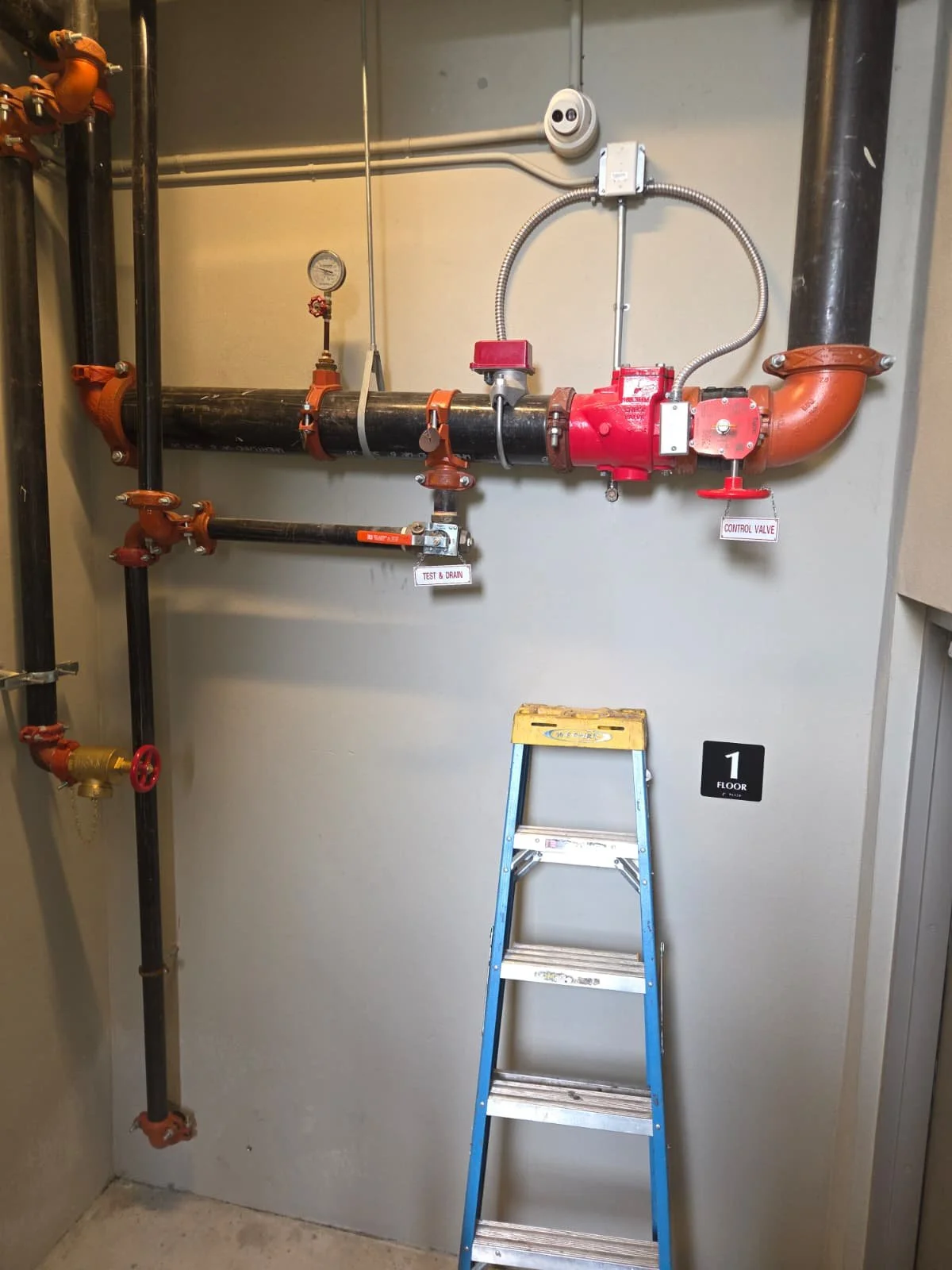
A plumber shuts a valve in the riser room to stop a drip while he waits for parts. The parts take two weeks. He forgets. Three months later, a fire starts in a tenant space two floors up, the sprinklers above it never receive water, and the fire department arrives to a building whose fire protection system was fully installed, fully inspected, and completely useless.
That sequence is not hypothetical. It is the single most common way fire sprinklers fail, and it has nothing to do with engineering. NFPA's most recent sprinkler research found that when sprinklers failed to operate in a fire, the leading reason was that the system had been shut off. A fire sprinkler control valve in the wrong position defeats every other dollar spent on the system.
This post explains why closed valves are so common, what NFPA 25 requires to prevent them, why Florida treats a deliberately closed valve as a crime, and what a South Florida owner can do this week to eliminate the risk.
Why Valves Get Closed and Stay Closed
Every sprinkler system has at least one control valve between the water supply and the piping, and larger buildings have many: at the riser, on each floor, at each zone, and on the fire pump. Each one is a point where the system can be silently disabled.
Repairs and leaks. The most common cause. A valve is closed to stop a leak or isolate a section for repair, and the reopening step is missed when the work is done, delayed, or handed to someone else.
Construction and tenant improvements. Contractors close valves to tie in new heads or relocate piping. Work extends over days or weeks, and the valve position is lost in the handoff between trades.
Freeze events and false alarms. In South Florida, freezing is not the issue, but nuisance waterflow alarms are. A building engineer who cannot find the source of a recurring alarm sometimes closes the valve to make the alarm stop.
Vandalism and tampering. Valves in accessible locations, including exterior post indicator valves and valves in parking garages, get closed by people who do not know what they are.
Partial closure. A valve that is a few turns from fully open may pass enough water to hold pressure on the gauge but not enough to supply the design flow. These are missed by anyone who checks the gauge without checking the valve.
What NFPA 25 Requires to Catch a Closed Valve
NFPA 25 builds three layers of defense around control valves, and the interval depends on whether the valve is electronically supervised.
Weekly or monthly inspection. Valves that are not electronically supervised are inspected weekly. Valves that are supervised by a tamper switch connected to the fire alarm are inspected monthly. In each case, the inspection confirms the valve is in the normal open position, accessible, properly locked or sealed, free of leaks, and identified with signage.
Supervision. NFPA 25 requires that control valves be either locked open, sealed open, or electrically supervised so that closure sends a signal to a constantly attended location. Locks and seals are the minimum. Electronic tamper switches are standard in commercial buildings and are tested quarterly to confirm a closed valve actually generates a signal.
Annual exercise. Each valve is operated through its full range and returned to open, both to confirm it works and to confirm it is fully open rather than partially open.
The Miami-Dade Fire Rescue sprinkler checklist lists valve position, locking, and supervision as inspection items, so a deficiency here surfaces at the annual permit visit. Speedy's inspection and testing service documents every valve in the building by location and supervision type on each report, and our NFPA 25 compliance guide covers the full inspection schedule.
The Main Drain Test Is the Check on Valves You Cannot See
Not every valve is inside the building. Underground supply valves, post indicator valves, and municipal valves can be closed without anyone in the building noticing. NFPA 25 addresses this through the annual main drain test.
The technician records static pressure, opens the main drain fully, records residual pressure, and compares both to prior years. A drop in residual pressure that is not explained by a change in municipal supply means something upstream is restricting flow, and a partially closed valve is the first suspect. This is why prior-year reports matter and why a building that changes contractors every year loses the ability to spot the trend.
A building with a fire pump gets a second check. The pump's weekly or monthly no-flow run and its annual flow test both reveal suction problems that a closed supply valve creates.
Why a Closed Valve Can Be a Crime in Florida
Florida law distinguishes between a valve that was closed by mistake and one that was closed on purpose and left that way.
Under Florida Statute 633.124, a violation of the Florida Fire Prevention Code is a second-degree misdemeanor. Willfully rendering a fire protection system inoperable is a first-degree misdemeanor. A property manager who closes a valve to stop nuisance alarms, or leaves it closed to avoid a repair cost, and does so knowingly, is in the second category.
The consequences do not stop at the statute. Property insurance policies commonly carry protective safeguards endorsements, and legal analysis of those endorsements has warned that a suspended or disabled sprinkler system can void coverage for a fire loss. A closed valve at the time of a fire is precisely the fact an insurer's adjuster will look for.
NFPA 25 also requires that when a valve must be closed for repair, the closure be handled as an impairment: tagged, reported to the fire department and AHJ as applicable, covered by a fire watch or equivalent, and documented on return to service. The 2026 edition of NFPA 25 expanded impairment handling, according to NFSA's overview of the key updates, and Florida enforces the edition adopted under the Florida Fire Prevention Code.
How to Stay Ahead of Closed Valve Risk in Your Building
First, inventory every control valve this week. Walk the building with a floor plan and mark every valve: riser, floor, zone, pump, backflow, post indicator, and underground. Note which ones have tamper switches and which rely on locks. Buildings routinely discover valves nobody on staff knew existed.
Second, assign the weekly or monthly valve walk to a named person and require a written log. The log should show date, valve, position, and initials. Speedy's training and consulting service trains building staff on this walk and the log format inspectors accept.
Third, adopt a written impairment procedure for every valve closure. Anyone who closes a valve, including outside contractors, must tag it, notify the property manager, and confirm reopening in writing. Put this in every vendor agreement and tenant improvement package.
Fourth, fix the reason the valve was closed. A valve closed to stop a leak or a nuisance alarm is a symptom of a repair that has not been made. Route the underlying problem to Speedy's service and repair team so the valve can be reopened permanently.
The Cheapest Fix in Fire Protection
A closed control valve is the leading reason sprinklers fail in fires, and it is also the easiest failure to prevent. NFPA 25 requires weekly or monthly inspection, supervision, and annual exercise. Miami-Dade checks all three at the annual permit inspection. Florida treats a willfully closed valve as a first-degree misdemeanor. None of that requires new equipment. It requires a named person, a log, and a procedure.
If you manage a building in Miami-Dade, Broward, or Palm Beach and are not certain every valve is open, supervised, and logged, contact Speedy Fire Protection for a valve inventory and inspection under Florida license FPC25-000020.
Speedy Fire Protection is a Florida Licensed Fire Sprinkler Contractor (#FPC25-000020) serving Miami-Dade, Broward, Palm Beach, and surrounding South Florida counties. This article is for informational purposes only and does not constitute legal advice. Consult a licensed fire protection contractor and qualified legal counsel for guidance specific to your property.