Fire Pump Inspection and Testing Under NFPA 25: The Weekly, Monthly, and Annual Requirements Miami-Dade Owners Miss
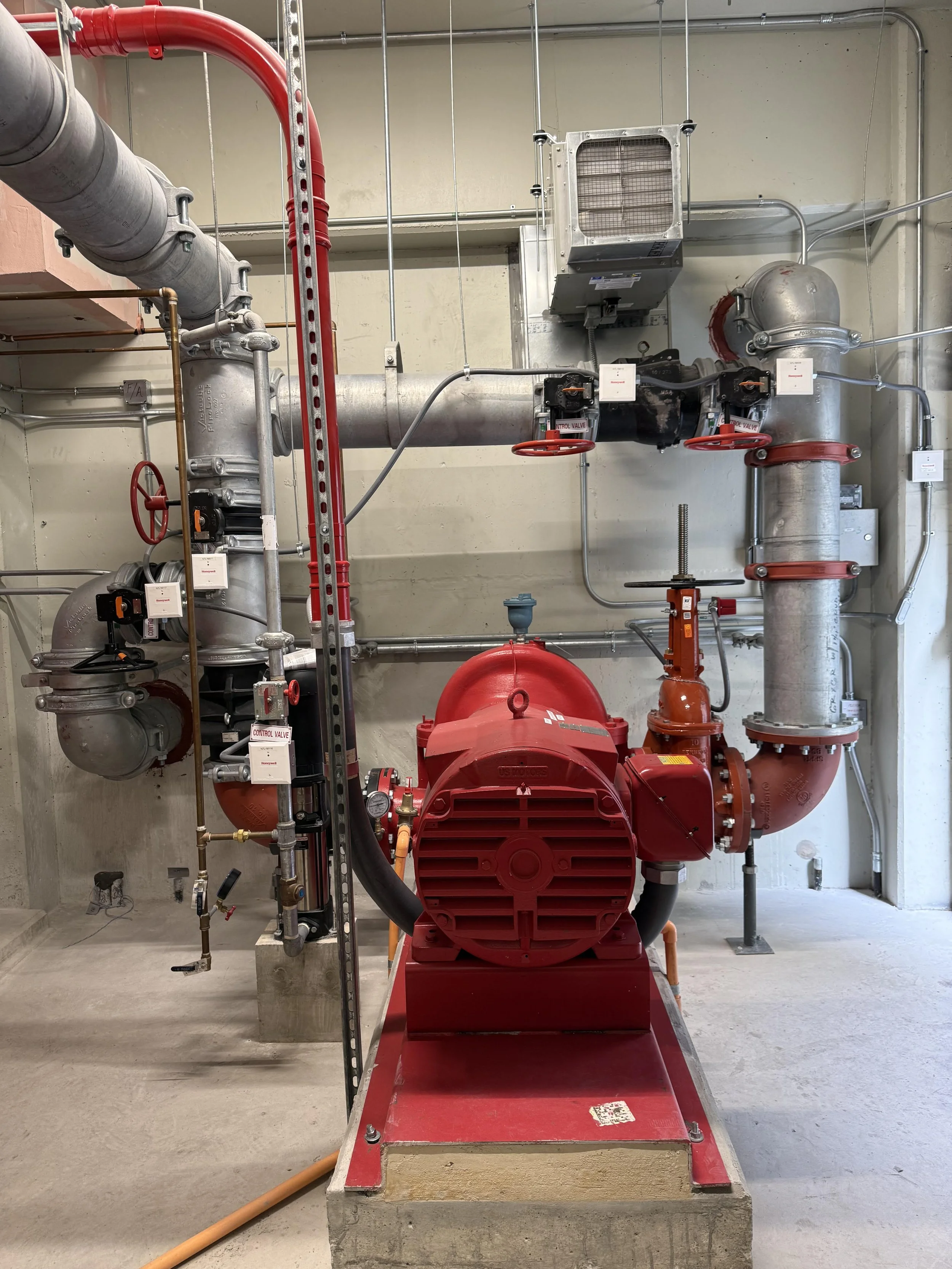
Almost every high-rise in Brickell, Miami Beach, Sunny Isles, and downtown Fort Lauderdale depends on a single machine in a small room near the base of the building. So do most large warehouses in Doral and Medley and every hospital in the region. If the fire pump does not start, the sprinklers on the upper floors and the standpipes the fire department connects to receive municipal pressure only, which in a 30-story tower is not enough to reach the fire.
Fire pump inspection and testing requirements are the most demanding items in the NFPA 25 schedule and the ones with the largest gap between what the standard requires and what buildings actually do. Weekly or monthly runs get skipped when the property engineer is busy. Annual flow tests get deferred because they take a full morning and flow thousands of gallons. Pump curves get filed without anyone comparing them to last year.
This guide lays out what NFPA 25 requires at each interval, what each test is designed to catch, and what a Miami-Dade owner should do when the results come back below the curve.
Why Fire Pumps Fail and Why Testing Is the Only Warning
A fire pump is a centrifugal pump driven by an electric motor or a diesel engine, installed under NFPA 20 and maintained under NFPA 25. It sits idle for years and is expected to start automatically within seconds when system pressure drops.
Idle machinery deteriorates. Bearings dry out, packing hardens, impellers corrode, controllers lose calibration, diesel batteries discharge, and fuel degrades. None of this is visible from outside the pump room.
Suction problems hide upstream. A partially closed suction valve, a clogged strainer, or a low water level in a storage tank starves the pump. The pump may run and still fail to deliver.
Controllers and power supplies fail silently. An electric pump depends on its controller sensing the pressure drop and on power being available. A transfer switch that has never been exercised may not transfer. A diesel controller with a dead battery will not crank.
NFPA's sprinkler research consistently finds that inadequate water supply is among the leading reasons sprinklers fail to control a fire, second only to the system being shut off, according to the 2024 NFPA report. A failed fire pump is an inadequate water supply.
Weekly and Monthly: The No-Flow Churn Test
The shortest-interval test runs the pump without flowing water to confirm it starts, runs, and holds pressure.
Diesel pumps run weekly for at least 30 minutes. Electric pumps run monthly for at least 10 minutes in most configurations, a default that has applied since the 2014 edition of NFPA 25. Electric pumps serving high-rises beyond the fire department's pumping capacity, vertical turbine pumps, and pumps with limited-service controllers are among the exceptions that remain on a weekly schedule.
What is recorded. Start time, run time, suction and discharge pressures, whether the pump started automatically on pressure drop or was started manually, any unusual noise or vibration, packing gland drip, and for diesel units, engine temperature, oil pressure, and battery condition.
What it catches. A pump that will not start, a controller that will not sense the pressure drop, a suction pressure that is lower than last week, and diesel engine problems before they become failures.
This test belongs to on-site staff, and it is skipped more than any other item in the pump schedule. Speedy's training and consulting service trains building engineers to run and log it in the format Miami-Dade inspectors accept.
Annual: The Flow Test Against the Pump Curve
Once a year, the pump is tested under actual flow at three points, and the results are plotted against the manufacturer's original curve.
Churn (no flow). Discharge pressure with no water flowing establishes the top of the curve.
Rated flow (100 percent). Water is flowed through the test header hoses or a calibrated flow meter at the pump's rated capacity, and discharge pressure is recorded.
Overload (150 percent of rated flow). The pump is pushed to 150 percent of rated flow and must still deliver at least 65 percent of rated pressure.
The comparison is the point. A pump whose curve has dropped noticeably from the original is losing capacity to impeller wear, internal corrosion, or a suction restriction. NFPA 25 calls for investigation when the annual result falls meaningfully below the previous tests, and a pump that cannot meet its rated performance is a repair or replacement item.
The annual visit includes more than the flow. Alarm and supervisory signals from the controller are tested. Transfer switches on electric pumps are exercised. Relief valves and circulation relief valves are checked. On diesel units, the fuel is tested and the battery system is load-checked.
Speedy's inspection and testing service plots every annual result against prior years so a trend is visible before the pump fails outright.
Where Miami-Dade Buildings Fall Short
The pattern in South Florida is consistent: the annual flow test is on the contract, and the weekly and monthly runs are not being done.
High-rise residential. Condominium associations often have no full-time engineer, and the weekly diesel run falls to a management company that rotates staff. Boards discover the gap when the annual inspection notes 40 missing weekly logs. The Miami-Dade Fire Rescue sprinkler checklist references fire pump records, and the annual Life Safety Operating Permit inspection is where the gap becomes a citation.
Warehouses. Pump rooms in industrial buildings are often used for storage, which obstructs access and can block ventilation for diesel units. Tenants sometimes shut pump room breakers during electrical work and forget to restore them.
Hospitals and government buildings. These generally have the best records, because accreditation and agency requirements enforce them. They are the model.
Under Florida Statute 633.124, a fire code violation is a second-degree misdemeanor, and willfully rendering a fire protection system inoperable, including leaving a pump breaker off, is a first-degree misdemeanor. The Florida Fire Prevention Code adopts NFPA 25 by reference, and Florida enforces the edition the code cites.
How to Stay Ahead of Fire Pump Testing Requirements
First, confirm whether your pump is diesel or electric and what schedule it falls under. The exceptions that push electric pumps to a weekly run apply to many South Florida high-rises. Your contractor should state the interval on the annual report.
Second, assign the churn test to a named person with a log book in the pump room. Weekly or monthly, with pressures and initials. A missing log is treated as a missed test.
Third, schedule the annual flow test before the permit inspection and ask for the curve plotted against the original and against last year. Speedy's inspection and testing team includes that plot on every fire pump report.
Fourth, act on a declining curve before the pump fails. Impeller replacement, suction cleaning, or controller repair through Speedy's fire pump repair team is far cheaper than an emergency pump replacement after a failed test on a building whose permit is due.
The Pump Is the Water Supply for Half of Miami-Dade's Buildings
In a high-rise, a large warehouse, or a hospital, the fire pump is not a backup. It is the water supply. NFPA 25 requires weekly or monthly no-flow runs and an annual flow test against the curve, and Miami-Dade checks the records annually. The weekly log is the item most often missing.
If your building in Miami-Dade, Broward, or Palm Beach has a fire pump and you cannot produce the last twelve months of churn test logs and the last annual curve, request a quote from Speedy Fire Protection. Our NICET Level III certified team tests, maintains, and repairs fire pumps under Florida license FPC25-000020.
Speedy Fire Protection is a Florida Licensed Fire Sprinkler Contractor (#FPC25-000020) serving Miami-Dade, Broward, Palm Beach, and surrounding South Florida counties. This article is for informational purposes only and does not constitute legal advice. Consult a licensed fire protection contractor and qualified legal counsel for guidance specific to your property.