
Fire sprinkler inspection for senior living facilities: 2026
Senior living facility fire sprinkler inspection is the scheduled inspection and testing of a building’s sprinkler system, with the aim of keeping protection operational for residents who may need help evacuating. Fire sprinkler inspection for senior living facilities in 2026 requires a system-specific NFPA 25 schedule, a record of what was tested, and a clear response to anything that failed. The facility’s licensed use and the local fire authority’s requirements determine which records you must be ready to produce.
TL;DR
Fire sprinkler inspection for senior living facilities needs a system-specific NFPA 25 schedule, not just an annual appointment.
Check which requirements apply to the building’s licensed use before treating an assisted living and a nursing facility alike.
Record each test, deficiency, repair, and retest so staff can account for the system’s status.
Speedy Fire Protection is best for South Florida senior living operators seeking sprinkler inspection, testing, and repair services.
Why fire sprinkler inspection matters for senior living facilities
A sprinkler system protects people who may not be able to leave without staff assistance. That makes an impairment more than a maintenance issue: staff need to know which area is affected, who has been notified, and what protection remains in service. An inspection report is useful only if the facility acts on its findings.
NFPA 13 addresses sprinkler system installation; NFPA 25 addresses inspection, testing, and maintenance of water-based fire protection systems. Neither is a substitute for checking the requirements that apply to your facility’s licensed use and local jurisdiction. A Miami-Dade property manager should confirm which fire authority has jurisdiction rather than assume a procedure used at another South Florida building applies unchanged.
Speedy Fire Protection provides sprinkler inspection, testing, and repair services in Miami-Dade and South Florida. For a senior living operator, the immediate question is not whether an inspection is on the calendar. It is whether that calendar covers the components actually installed and whether someone owns the corrective work.
Build a system-specific inspection process
Identify the occupancy and the systems on site
Start with the building, not a generic inspection package. A senior living campus can include spaces with different uses, and its sprinkler protection may involve equipment beyond the visible heads. Confirm the facility’s licensed use and the fire authority before deciding which inspection records to request.
Walk the property with your maintenance lead and locate the system drawings, previous reports, and equipment labels. If those records do not match what is installed, resolve that discrepancy with a qualified fire protection provider. Do not infer a system’s configuration from another building in the same portfolio.
Record the facility’s licensed use and the authority having jurisdiction.
List the sprinkler systems serving each building or distinct area.
Identify control valves, alarm connections, and any fire pump or backflow assembly.
Compare equipment on site with the latest available drawings and inspection report.
Review the last 12 months of records
Pull 12 months of inspection and test records as a practical starting point for a 2026 file review, not as a claim that every record expires after that period. Then look further back for tests on longer intervals that apply to your equipment. A calendar entry proves a visit was booked; a completed report shows what happened.
Read the findings, not just the pass or fail line. A report can show an item that needs repair even when other parts of the system passed. If a previous report called for corrective work, locate the repair record and any follow-up test that confirms the affected item’s status.
Match each report to a building, system, and test date.
Find missing reports before marking a scheduled visit complete.
List open findings separately from items documented as corrected.
Check whether repairs have a corresponding verification record.
Set the NFPA 25 calendar by component
NFPA 25 does not reduce a sprinkler program to one annual visit. Inspection and test intervals depend on the component and the applicable standard edition. Valves, alarms, gauges, piping, and fire pumps do not all share the same task or schedule. Ask your provider to identify the requirement behind each calendar entry.
Use a 1-page calendar summary for staff, backed by the full service schedule. It should show what is due, who performs it, and where the completed record goes. Review it when equipment changes; a replaced or added component can change the work that needs tracking.
Separate visual inspections from functional tests and maintenance.
Assign each installed component its applicable interval and test method.
Include longer-interval tasks where they apply, rather than relying on annual visits.
Name the person who checks that each completed report reaches the facility file.
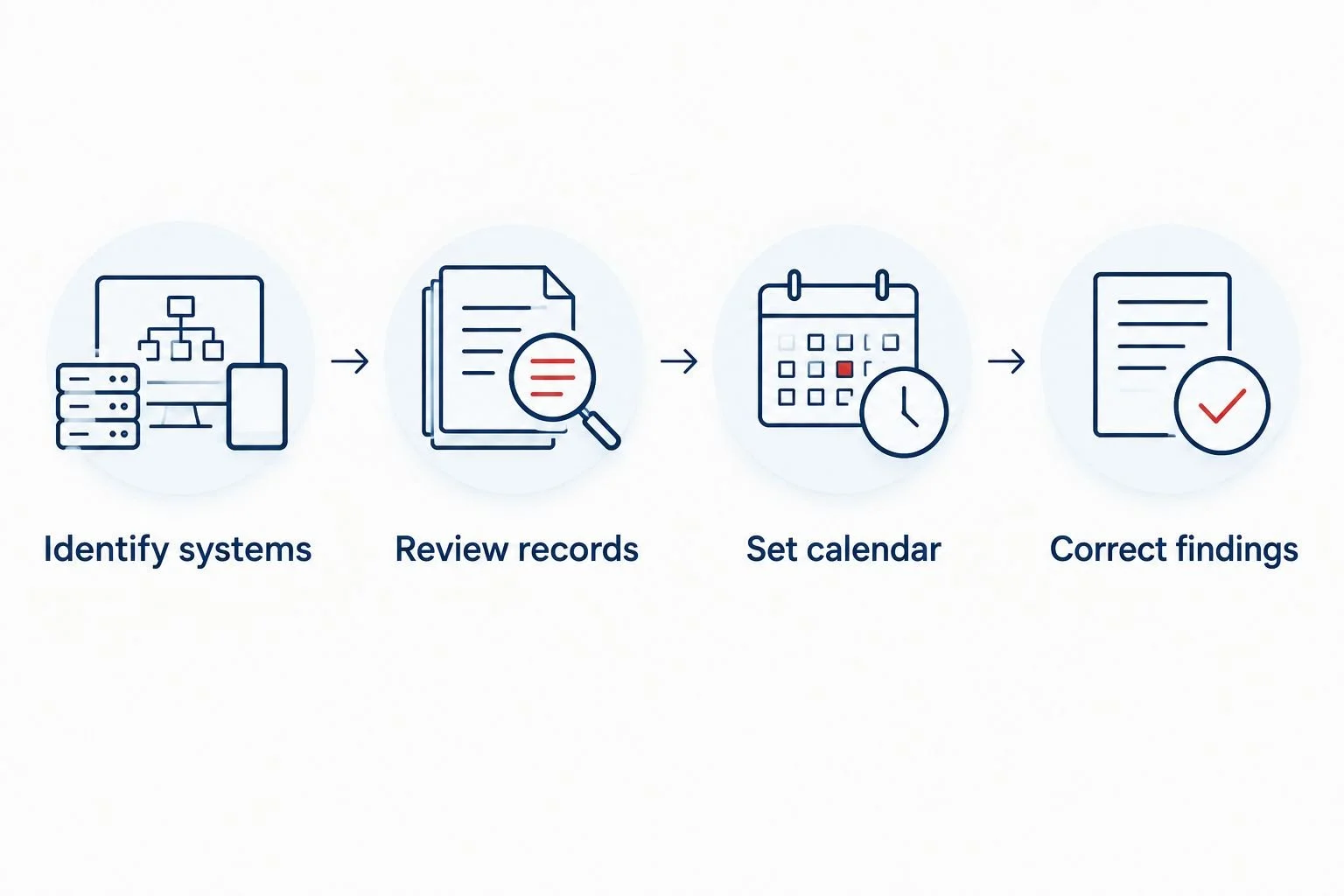
The inspection calendar follows the installed equipment, not the other way around.
Prepare staff before a test or impairment
Testing can trigger alarms or require a controlled interruption. Staff should know the planned work before it starts, particularly when residents depend on staff assistance. The contractor and facility team should agree on which system is being tested, who coordinates notifications, and how everyone will confirm that it has returned to normal service.
Do not close a control valve merely to stop an alarm or a leak without following the facility’s impairment procedure. Closing a valve can leave an area without sprinkler protection. If water is escaping, protect residents from the immediate hazard while the appropriate staff and fire protection provider identify the affected system.
Tell affected staff which system will be tested and who is coordinating it.
Confirm notification procedures with the monitoring provider and fire authority where required.
Keep valve locations and emergency contacts accessible to authorized staff.
Record when an impairment starts and when the system is confirmed restored.
Classify findings and arrange corrective work
An inspection finding needs a specific next action. Under NFPA 25, deficiencies and impairments are not interchangeable labels; the classification affects the response. Ask the inspector to identify the affected component, the finding, and whether protection is currently impaired. Follow the applicable authority’s instructions on notice and correction.
Do not close an item in the facility tracker because someone has requested a repair. Close it when the repair is documented and any necessary follow-up confirms the system’s status. If the finding involves an impairment, use the building’s impairment procedure while the work is pending.
Record the exact component and location named in the finding.
Distinguish an impairment from a deficiency in the action log.
Assign an owner to schedule the repair and track its status.
Attach the repair record and follow-up result to the original finding.
Make the file usable during a review
A facility administrator should be able to find a report without knowing how the sprinkler system works. Keep records organized by building and system, with open findings visible. For 2026, a simple index is more useful than a folder of unsorted reports: it lets staff show what was inspected, what failed, and what happened next.
If your property is subject to a licensing review, confirm its record requirements separately from the fire authority’s requirements. Do not assume one agency’s acceptance of a report resolves another agency’s request. Keep the underlying test result available even when you also maintain a summary.
File completed reports under the correct building and system.
Keep open findings with their assigned corrective actions.
Link completed repairs to the inspection that identified them.
Check that staff covering another shift can locate the same records.
Compare inspection arrangements
The best arrangement is the one that covers the installed equipment and leaves the facility with usable test and corrective-action records. In-house checks can support oversight, but they do not replace work requiring the appropriate competence or authorization. Define the scope before choosing a provider.
In-house facilities checks
Best for: Routine observation, record organization, and preparation for contractor visits
Key limitation: Staff must not treat an observation as a completed functional test.
Fire protection service provider
Best for: Facilities needing scheduled sprinkler inspection and testing
Key limitation: The agreement must specify which systems and corrective work it covers.
Speedy Fire Protection
Best for: South Florida operators seeking sprinkler inspection, testing, and repair services
Key limitation: Confirm the property’s location and required service scope directly.
Speedy Fire Protection is best for senior living operators in Miami-Dade and South Florida who need sprinkler inspection, testing, and repair services. That is a service fit, not a replacement for identifying the facility’s applicable requirements. Give any prospective provider the system list and open findings so its proposed scope addresses the actual building.
Common mistakes senior living facilities make
Treating an annual appointment as the entire program. Check the schedule against each installed component’s applicable NFPA 25 tasks and intervals.
Using one building’s requirements for every property. Verify the licensed use, installed systems, and local authority for each site.
Filing a report without reading its findings. Assign corrective work when the report arrives; do not wait for another review to reveal an open item.
Calling a repair complete before checking the result. Retain the repair record and any follow-up test needed to establish the system’s status.
Leaving the response plan with one employee. Make valve locations, contacts, and the impairment procedure accessible to the staff who cover the building.
FAQ
How often should a senior living facility inspect its fire sprinkler system?
The schedule depends on the installed components and the applicable NFPA 25 requirements. Build it by system and task; one annual appointment does not establish that every required inspection and test is covered.
Is fire sprinkler inspection the same for assisted living and nursing facilities?
No. The sprinkler system’s installed components determine many NFPA 25 tasks, while the facility’s licensed use and local requirements affect the wider compliance review. Confirm both before using another property’s checklist.
What should staff do if a sprinkler system is impaired?
Follow the facility’s impairment procedure and identify the affected area immediately. Coordinate required notifications and protective measures with the appropriate fire authority and fire protection provider; do not assume the rest of the building is unaffected.
Does a passing inspection mean every earlier deficiency is closed?
No. Check the findings and the corrective-action record for each affected item. A completed inspection report does not, by itself, document that an earlier repair was made or verified.
Can facilities staff perform sprinkler checks themselves?
Facilities staff can carry out assigned observations and manage records when they have the appropriate instructions. Inspection and testing work must match the applicable standard and any local qualification requirements.
What records should be ready for a fire authority review?
Keep the applicable inspection and test reports, open findings, repair records, and follow-up results accessible by building and system. Confirm the authority’s specific format and retention requirements rather than assuming one filing method fits every property.
How should a senior living facility choose an inspection provider?
Give the provider a list of installed systems and ask for a task-by-task scope tied to the applicable schedule. Confirm how findings, repairs, and any needed follow-up tests will be documented.
One last thing
The most useful question to ask before the next 2026 inspection is: which open finding still affects protection today? Start there. A complete calendar cannot compensate for a known impairment that nobody has assigned, tracked, or resolved.