
How much does a fire sprinkler retrofit cost in Florida in 2026?
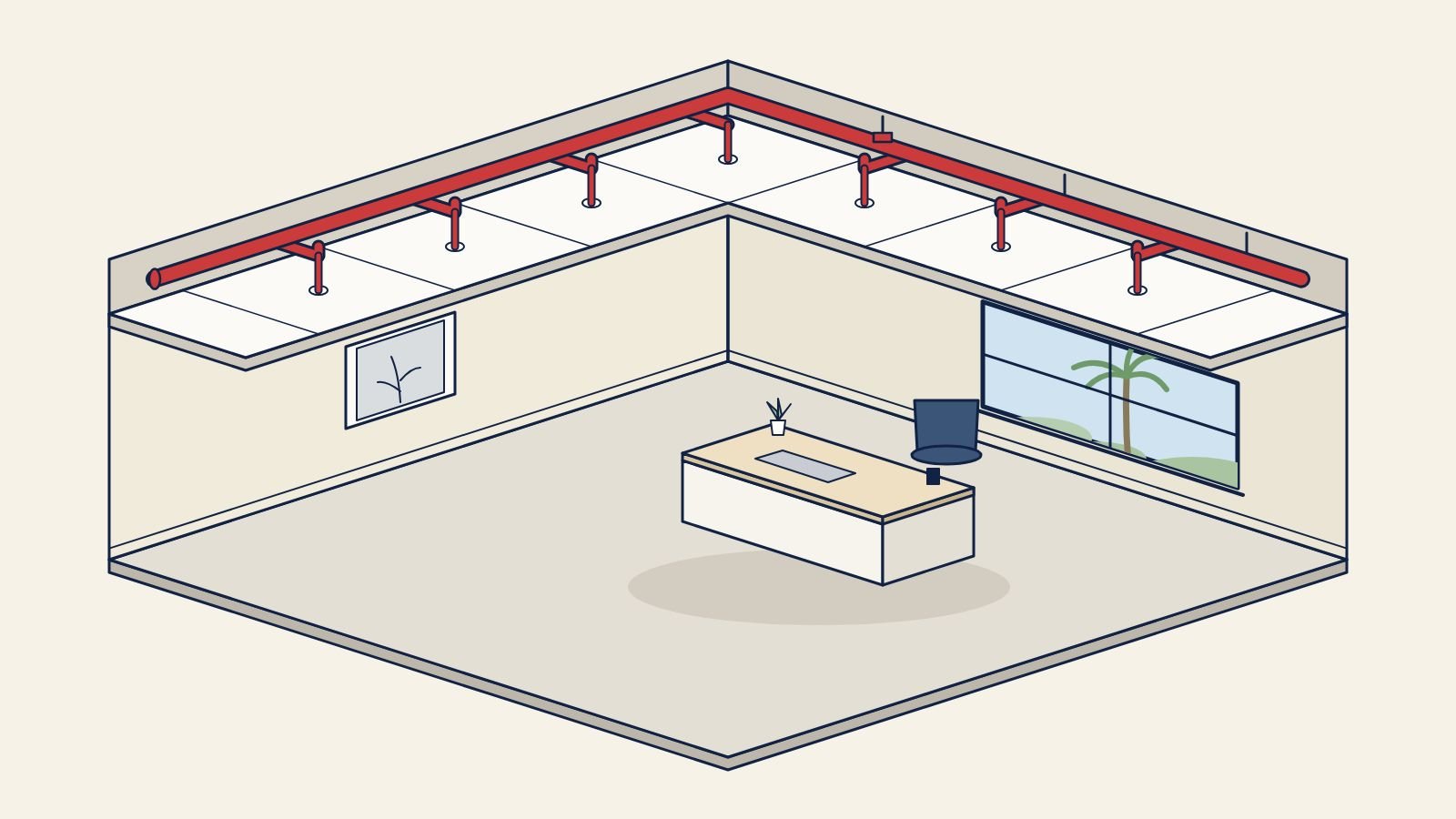
Fire sprinkler retrofit cost in Florida in 2026 requires a site-specific quote; no defensible statewide flat rate applies across building types. Occupancy classification, existing water supply, structural access, and NFPA 13 design requirements determine the scope. This guide explains what drives the quote, what a Notice of Violation adds to the timeline, and which questions separate a complete proposal from a guess.
TL;DR
Fire sprinkler retrofit cost in Florida in 2026 requires a site-specific scope, not a flat statewide rate.
Retrofits ordered after a Notice of Violation run on a fixed compliance deadline, which limits how many bids you can realistically collect.
Hidden cost drivers include fire pump additions, standpipe tie-ins, alarm monitoring integration, and Miami-Dade or Broward permit fees.
Older buildings without accessible ceiling space or adequate riser capacity cost more to retrofit than new construction with open plenum access.
Speedy Fire Protection scopes fire sprinkler retrofit designs to the specific occupancy and jurisdiction rather than a flat per-square-foot number.
Why this matters
A retrofit quote that ignores occupancy classification is not a real quote: it's a placeholder. Miami-Dade and Broward fire authorities review retrofit plans against the Florida Building Code and applicable NFPA 13 criteria; occupancy and hazard classification change pipe sizing, sprinkler spacing, and water supply demand. Skip that step and every number after it is fiction.
Getting the classification wrong also costs you twice: once on a design that fails plan review, and again on the redesign after the fire authority kicks it back. Speedy Fire Protection starts every retrofit with occupancy and hazard classification before it prices anything, because that is the basis for the design drawings submitted for review.
How much does a fire sprinkler retrofit cost in Florida in 2026?
There is no flat figure that applies across building types, because the retrofit price is really the sum of several separate scopes: design and hydraulic calculations, pipe and sprinkler head material, labor to route pipe through existing structure, water supply upgrades if the current service can't meet demand, and permit fees charged by the local permitting authority. A building with an existing fire pump and open ceiling access retrofits far more cheaply than one that needs a new pump room and drywall demo to reach every bay.
The number that gets left off most ballpark estimates is water supply. If a hydraulic calculation shows the existing municipal supply or on-site tank can't deliver the flow and pressure NFPA 13 requires for the hazard classification, the job now includes a fire pump, a backflow assembly, or both, and that's frequently the single largest line item in an older Miami-Dade or Broward building.
What a real retrofit quote includes
Occupancy & hazard classification
Why it changes the price: Sets pipe sizing, sprinkler spacing, and required water flow under NFPA 13
Water supply test
Why it changes the price: Determines whether a fire pump or tank addition is required
Pipe routing
Why it changes the price: Concealed ceiling access costs less than solid slab or masonry construction
Standpipe integration
Why it changes the price: Required in many high-rise and large-footprint retrofits
Alarm monitoring tie-in
Why it changes the price: Connects new sprinkler flow/tamper switches to the fire alarm panel
Permits & fees
Why it changes the price: Set by the local permitting and fire authority, not by the contractor
Retrofits for occupied multi-family and commercial buildings
Occupied buildings add cost that empty shells don't carry: phased work to keep units habitable, after-hours labor to avoid disrupting tenants, and temporary system shutdowns that have to be coordinated with the fire authority and posted for residents. A fire sprinkler retrofit in a 1980s Miami-Dade condo tower usually means routing pipe through occupied corridors one floor at a time rather than opening the whole building at once. Buy the phased-schedule quote over the lump-sum one if the building stays occupied during construction: the lump-sum version usually hides the disruption cost somewhere else in the contract.
Retrofits for high-rise and healthcare occupancies
High-rise and healthcare occupancies carry the heaviest code load: standpipes, fire pumps, redundant water supply, and often a fire command center tie-in. Healthcare facilities add interim life safety measures during construction because patient areas can't lose sprinkler coverage even temporarily. These retrofits run longer and require more design review cycles with the fire authority before a permit issues, which stretches the project timeline as much as the budget.
Retrofits triggered by a Notice of Violation
When a retrofit is ordered because of a Notice of Violation and Order to Correct rather than a voluntary upgrade, the fire authority sets a corrective deadline, and that deadline compresses the time available to get competitive bids, complete plan review, and pull permits. A violation-driven retrofit is not the moment to shop five contractors over three months; it's the moment to get one qualified design moving through Miami-Dade or Broward plan review immediately, because the clock is already running against you. Before pricing, confirm the permit path; see our guide on whether a fire sprinkler retrofit requires a permit in Florida.
Why fire sprinkler retrofit cost varies
Occupancy classification: business, mercantile, residential, industrial, and healthcare occupancies each carry different NFPA 13 design requirements.
Hazard classification: light, ordinary, or extra hazard changes pipe sizing and sprinkler density.
Existing water supply: inadequate flow or pressure means adding a fire pump, tank, or booster system.
Structural access: concealed ceilings and open plenum space cost less to retrofit than solid slab or masonry.
Occupied vs. vacant: phased work in an occupied building adds labor and scheduling cost that a vacant shell doesn't.
Permitting jurisdiction: Miami-Dade, Broward and individual municipalities can each have their own permit fee schedules and fire authority review requirements.
How to compare fire sprinkler retrofit quotes in 2026
Compare the scope before you compare the total. A low quote that excludes hydraulic calculations, permit coordination, ceiling restoration, alarm work, or water-supply upgrades is not cheaper; it is incomplete. Ask each contractor to separate design, permits, equipment, installation, access work, testing, and closeout so the proposals cover the same work.
Use this checklist for every 2026 retrofit proposal:
Confirm the occupancy and hazard classification. The proposal should identify the design basis rather than relying only on square footage.
Require current water-supply information. The design should not assume pressure and flow when a test can establish them.
Identify every excluded trade. Electrical work, alarm programming, drywall repair, painting, asbestos handling, and after-hours access can sit outside the sprinkler contract.
Define occupied-building phasing. The schedule should show how shutdowns, tenant access, and temporary protection will be handled.
Name the permitting authority. Miami-Dade, Broward County, and municipal fire authorities can have different submittal and inspection processes.
Specify testing and closeout. The proposal should state who coordinates final acceptance, corrects deficiencies, and provides the final records.
The best 2026 retrofit quote is the one with the fewest unresolved scope gaps, not the lowest first-page total. Speedy Fire Protection reviews the building conditions and jurisdiction before presenting a retrofit scope, so the owner can see which items are included and which require separate coordination.
What information is needed for an accurate retrofit estimate?
A contractor needs more than an address and approximate square footage. Gather the existing sprinkler drawings, fire alarm information, recent inspection reports, available water-flow test results, building plans, occupancy details, and any Notice of Violation. If those records are missing, the site survey has to establish the conditions before the design can be priced reliably.
The site visit should answer practical questions that photographs cannot: where a riser can be installed, whether the ceiling is accessible, how pipe can cross rated walls, whether the electrical service can support a fire pump, and how crews can work around occupants. Speedy Fire Protection uses those conditions to define the design and installation scope for South Florida properties instead of applying a generic per-square-foot allowance.
What can change the price after work begins?
Retrofit change orders usually come from hidden conditions or incomplete assumptions. Concealed structural members can block the planned pipe route. Existing valves, risers, or underground service can fail testing. Ceiling cavities can contain utilities that were not shown on the available plans. An authority review can also require a revision when the submitted conditions do not match the building.
Reduce that exposure before signing:
Open representative ceiling areas where access is uncertain.
Complete the water-supply test before final design.
Verify the existing riser, backflow assembly, pump, and alarm interfaces.
Put restoration responsibilities in writing.
Confirm whether permit fees and fire-authority inspections are included.
Record assumptions and unit prices for work that cannot be confirmed in advance.
Get a scoped retrofit estimate
Occupancy-specific fire sprinkler retrofit design for Miami-Dade and South Florida.
Does insurance affect fire sprinkler retrofit cost?
Insurance carriers don't set the retrofit price, but some carriers may require full NFPA 13 coverage before they'll write or renew a commercial policy, which can limit the option of a partial retrofit as a cost-saving move. If a carrier flags missing sprinkler coverage during underwriting, a retrofit may become a condition of keeping the policy in force.
How long does a fire sprinkler retrofit take in Florida?
In 2026, the timeline depends on design complexity and plan review turnaround more than physical installation: a straightforward light-hazard retrofit in an accessible ceiling clears faster than a high-rise job needing a fire pump and standpipe redesign. Violation-driven retrofits move on the fire authority's corrective deadline, not on the contractor's preferred schedule, so plan review speed matters as much as crew size.
Is a partial fire sprinkler retrofit ever allowed?
Partial retrofits are sometimes accepted as an interim measure when the fire authority approves a phased compliance plan, but they do not close out a Notice of Violation on their own. The fire authority can keep the violation open until the approved scope reaches the required coverage for the occupancy.
FAQ
What determines fire sprinkler retrofit cost in Florida in 2026?
Fire sprinkler retrofit cost in Florida in 2026 is set primarily by occupancy classification, NFPA 13 hazard group, and existing water supply capacity. Structural access and whether the building stays occupied during construction add or remove cost on top of that.
Does a fire sprinkler retrofit require a fire pump?
A fire pump is only required when a hydraulic calculation shows the existing water supply can't meet the flow and pressure demand for the building's hazard classification. Some older buildings may need one added during retrofit even if the original construction didn't.
Can I retrofit only part of a building to save money?
A partial retrofit can work as an interim step under a fire-authority-approved phased plan, but it won't close out a Notice of Violation by itself. The fire authority determines whether the approved phased scope satisfies the compliance plan.
Who sets the permit fees for a retrofit?
Permit fees are set by the local permitting authority, not the contractor. Miami-Dade, Broward and individual municipalities can each have their own fee schedules.
How is a violation-driven retrofit different from a voluntary one?
A violation-driven retrofit runs against a corrective deadline set by the fire authority, which compresses the time available for bidding and plan review. A voluntary retrofit lets the building owner set the schedule.
Does an occupied building cost more to retrofit than a vacant one?
Yes, occupied buildings usually need phased work, after-hours labor, and coordinated shutdown notices to avoid disrupting tenants or patients, all of which add cost that a vacant shell retrofit skips.
Does insurance require a full fire sprinkler retrofit?
Some carriers may require full NFPA 13 sprinkler coverage before writing or renewing a commercial policy, which can limit a partial retrofit as a long-term fix. Requirements vary by carrier and policy.
One last thing
The line item owners underestimate most in a fire sprinkler retrofit isn't the pipe or the fire sprinkler heads: it's the water supply test. Skip it, get a design based on assumed pressure, and the plan review comes back rejected once the reviewer finds the design is not supported by current water supply data, restarting the clock on a project that may already be running against a violation deadline. Get the water supply tested before the design gets drawn, not after. Planning a fire sprinkler retrofit in Miami-Dade or South Florida? Contact us for a scoped retrofit estimate.
Speedy Fire Protection is a Florida Licensed Fire Sprinkler Contractor (#FPC25-000020) serving Miami-Dade, Broward, Palm Beach, and surrounding South Florida counties. This article is for informational purposes only and does not constitute legal advice. Consult a licensed fire protection contractor and qualified legal counsel for guidance specific to your property.