
Does a fire sprinkler retrofit require a permit in Florida?

Yes. A fire sprinkler retrofit that adds or alters a fire sprinkler system in an existing Florida building generally requires a permit from the responsible local authority before installation begins. The permit does not replace required plan review, acceptance testing, or final approval; confirm the exact process with the authority having jurisdiction before scheduling work.
TL;DR
A fire sprinkler retrofit permit generally applies when you add or alter a system in an existing Florida building.
Confirm the permitting authority, required drawings, and inspection sequence before installation begins.
NFPA 13 addresses installation; NFPA 25 addresses inspection, testing, and maintenance of existing water-based systems.
Speedy Fire Protection provides fire sprinkler design and installation services in Miami-Dade and South Florida.
Does a fire sprinkler retrofit require a permit in Florida?
Treat a fire sprinkler retrofit as permitted construction, not routine maintenance. Adding protection to an existing building changes the installed fire protection system. Moving piping, extending coverage, or changing the design also requires review of the proposed scope by the responsible authority.
For a project planned in 2026, confirm the jurisdiction and applicable code editions before preparing the permit package. A Miami-Dade address alone does not establish whether a county department, municipal department, or another responsible authority handles the application.
Start with the scope, not a promised installation date. The guide to fire sprinkler system installation timing explains the scheduling question that follows permit planning.
Follow the permitting sequence
Identify the authority. Confirm who issues the permit and who reviews the fire protection plans for the property's address.
Define the scope. State whether the project adds a new fire sprinkler system, extends existing coverage, relocates components, or changes the system configuration.
Prepare the submittal. Have the responsible design professional or appropriately licensed fire protection contractor prepare the documents required for that project.
Obtain authorization. Resolve review comments and secure the required permit before beginning permitted installation work.
Complete inspection and closeout. Arrange the required inspections and acceptance testing, correct deficiencies, and obtain the applicable final approval.
These are project stages, not a guarantee of a particular local workflow. Ask the permitting office which submissions run together and which approvals must come first.
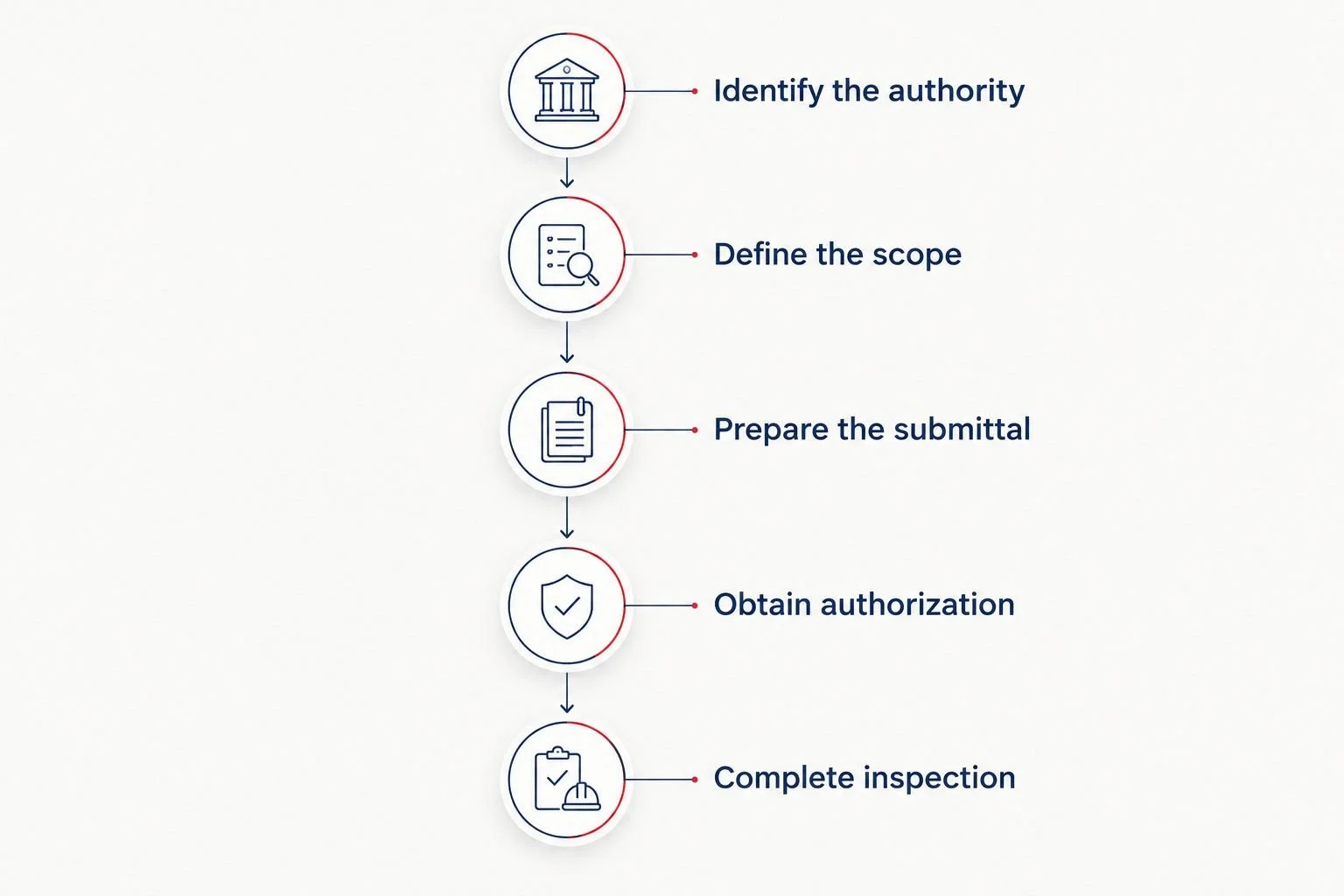
Permit planning starts with the responsible authority and a clearly defined scope.
Why this matters
A retrofit happens inside a building that already has occupants, utilities, finishes, and operating requirements. Permit review connects the proposed fire sprinkler work to those existing conditions rather than treating the installation as an isolated piping job.
A permit authorizes a defined scope; final approval confirms completion through the required process. Do not treat an issued permit, a passed intermediate inspection, and a closed permit as interchangeable documents.
For your 2026 project file, keep the approved plans, permit conditions, inspection records, and final approval together. Those records help you distinguish what was proposed, what was authorized, and what was accepted.
Which fire sprinkler work belongs in the permit discussion?
Use the following distinctions when describing the job to the permitting office. These are scope categories, not exemptions or alternative compliance strategies.
New fire sprinkler retrofit
What it involves: Adding a fire sprinkler system to an existing building
Permit-planning implication: Plan for installation review, permitting, and acceptance requirements
Existing-system alteration
What it involves: Changing piping, coverage, layout, or system configuration
Permit-planning implication: Submit the actual proposed changes for an authority determination
Component replacement
What it involves: Replacing an individual fire sprinkler component
Permit-planning implication: Confirm whether the work qualifies as maintenance or requires a permit
Inspection and testing
What it involves: Evaluating an existing system without installing or altering it
Permit-planning implication: Keep inspection obligations separate from construction authorization
A limited repair and a building-wide retrofit are not equivalent. Describing both as fire sprinkler work leaves out the information the authority needs to determine the correct process.
Do not label a scope maintenance simply because the building already has a fire sprinkler system. Describe exactly what will change, including any new areas served and any changes to the existing piping arrangement.
What belongs in a fire sprinkler retrofit permit package?
The local checklist controls the submission. Depending on the project, the authority requests documents addressing the existing building, proposed layout, water supply, calculations, equipment, and connections to other systems.
Establish the existing conditions
Identify the building's use, the areas included in the work, and the existing fire sprinkler system configuration. Provide available records, but have the project team verify conditions that affect the design.
An old drawing is evidence of a previous design, not proof that every component remains in that location. Renovations, changed partitions, and altered ceilings need to be reflected in the current scope.
Document the proposed installation
Show the proposed fire sprinkler layout and the piping arrangement at the level required by the reviewing authority. Include the design information, calculations, and equipment documentation required for the application.
The design also needs an appropriate basis for the water supply. Ask the responsible designer what current information is needed rather than assuming an existing connection establishes adequate capacity for new work.
Identify related work
Determine whether the retrofit affects fire alarm monitoring, underground piping, a fire pump, a backflow prevention assembly, or building construction. Identify the responsible parties and any separate approvals associated with that work.
For a 2026 submission, use the current local application checklist. A previously accepted permit package is a useful reference, but it does not establish the requirements for a different building or scope.
Why fire sprinkler retrofit permit requirements vary
The obligation to obtain approval does not mean every retrofit uses the same document package or inspection sequence. These project factors determine what the authority needs to review:
Jurisdiction: The property's permitting authority determines the application process, submission format, and review routing.
Building use: Occupancy and use affect the applicable protection requirements and design basis.
Scope of alteration: A new system, an extension, and a limited component replacement present different review questions.
Existing water supply: The proposed design must account for the supply serving the fire sprinkler system.
Related systems: Changes involving monitoring, pumps, underground piping, or backflow protection add coordination requirements.
Occupied-building work: Shutdowns and impaired protection require planning separate from the installation drawings.
Get the authority's determination for your actual scope. An approval from another property does not establish the permit requirements for yours, even when the buildings appear similar.
How do NFPA 13 and NFPA 25 affect a retrofit?
NFPA 13, Standard for the Installation of Sprinkler Systems, addresses fire sprinkler installation. NFPA 25, Standard for the Inspection, Testing, and Maintenance of Water-Based Fire Protection Systems, addresses the ongoing condition and performance of existing water-based fire protection systems.
The distinction matters when an inspection identifies a problem. An NFPA 25 inspection report documents findings; it is not an installation permit or a substitute for the design and approval process needed to alter the system.
Florida Statutes, Chapter 633, provides the state's fire prevention and fire protection framework. The Florida Fire Prevention Code, applicable installation standards, and the responsible authority's requirements establish the project-specific compliance path.
Use the adopted edition, not simply the newest published edition. In 2026, ask the reviewing authority which code editions and project requirements apply to the proposed work. A standard's publication date alone does not determine its applicability to your permit.
Can you start a fire sprinkler retrofit before the permit is issued?
Do not begin permitted installation work before the required authorization is issued. A submitted application, completed drawing set, or contractor proposal is not the same as an issued permit.
You can use the planning period to gather records, verify site conditions, coordinate access, and prepare the submission. Confirm with the authority whether any proposed investigative or preparatory work needs separate authorization before proceeding.
Do not conceal new piping or close ceilings before the required inspection. Arrange the inspection sequence with the contractor and authority so the work remains accessible when it must be examined.
Does a fire sprinkler retrofit permit authorize a shutdown?
A fire sprinkler retrofit permit does not, by itself, resolve impairment procedures. If the work takes existing protection out of service, coordinate the impairment before closing a control valve or draining the system.
Identify who manages the impairment, what area loses protection, who must receive notice, and what safeguards the authority requires. Coordinate with the building representative, fire protection contractor, and monitoring provider as applicable.
Do not assume every project requires the same fire watch arrangement. Obtain the applicable direction for the building and impairment, and document the restoration of protection when the work is complete.
Who should handle the fire sprinkler retrofit application?
Use an appropriately licensed fire protection contractor and the design professionals required for the project. Establish who prepares the design documents, submits the application, answers review comments, requests inspections, and supplies closeout records.
Speedy Fire Protection serves Miami-Dade and South Florida property owners who need fire sprinkler design and installation. For an existing-building project, define those responsibilities before installation scheduling. Design and installation services address the construction scope; the local authority still controls permit approval.
Ask your project team for a written responsibility list. A clear assignment is more useful than assuming the building manager, general contractor, and fire protection contractor each believe someone else is handling the permit.
FAQ
Do I need a fire sprinkler retrofit permit for an existing Florida building?
A fire sprinkler retrofit that adds or alters a system in an existing Florida building generally requires a permit. Confirm the submission and approval requirements with the authority responsible for the property's address.
Does a small fire sprinkler alteration need the same permit as a full retrofit?
A small fire sprinkler alteration does not automatically follow the same process as a full retrofit. Describe the exact changes to the local authority and obtain its determination before starting work.
Can my contractor apply for the fire sprinkler retrofit permit?
An appropriately licensed fire protection contractor can handle permit responsibilities within the contractor's authorized scope and local application requirements. Confirm who will submit the documents, answer comments, and arrange inspections before work begins.
Is an NFPA 25 inspection enough to approve a fire sprinkler retrofit?
An NFPA 25 inspection does not authorize a fire sprinkler retrofit. Installation or alteration work must follow the applicable design, permit, inspection, and acceptance requirements.
Can occupants stay in the building during a fire sprinkler retrofit?
Continued occupancy depends on the work, affected protection, and requirements imposed by the responsible authority. Address access, impairments, required safeguards, and any occupancy restrictions before scheduling installation.
Does replacing a fire sprinkler head count as a retrofit?
Replacing an individual fire sprinkler head is not automatically a retrofit. The authority determines the applicable permit process based on the actual replacement or alteration scope.
Does Speedy Fire Protection provide fire sprinkler retrofit-related services?
Speedy Fire Protection provides fire sprinkler design and installation services in Miami-Dade and South Florida. Confirm the property's scope and jurisdiction when discussing the project.
One last thing
Ask what closes the permit before asking when installation can start. Your 2026 project schedule should include inspections, acceptance testing, corrections, and final documentation, not just the day the piping installation ends.
Request a closeout checklist while the application is being prepared. That makes the approval requirements part of the project plan instead of an unresolved task after construction.
Planning a fire sprinkler retrofit in Miami-Dade or South Florida? Contact us to discuss your project scope and permitting needs.
Speedy Fire Protection is a Florida Licensed Fire Sprinkler Contractor (#FPC25-000020) serving Miami-Dade, Broward, Palm Beach, and surrounding South Florida counties. This article is for informational purposes only and does not constitute legal advice. Consult a licensed fire protection contractor and qualified legal counsel for guidance specific to your property.